Personal essays, notes, and ideas worth sharing.

Month: March 2026 (Page 5 of 9)

Why You Should Start a Failure Journal (And What Mine Taught Me About Creative Block)

The Spectacular Disaster That Changed Everything

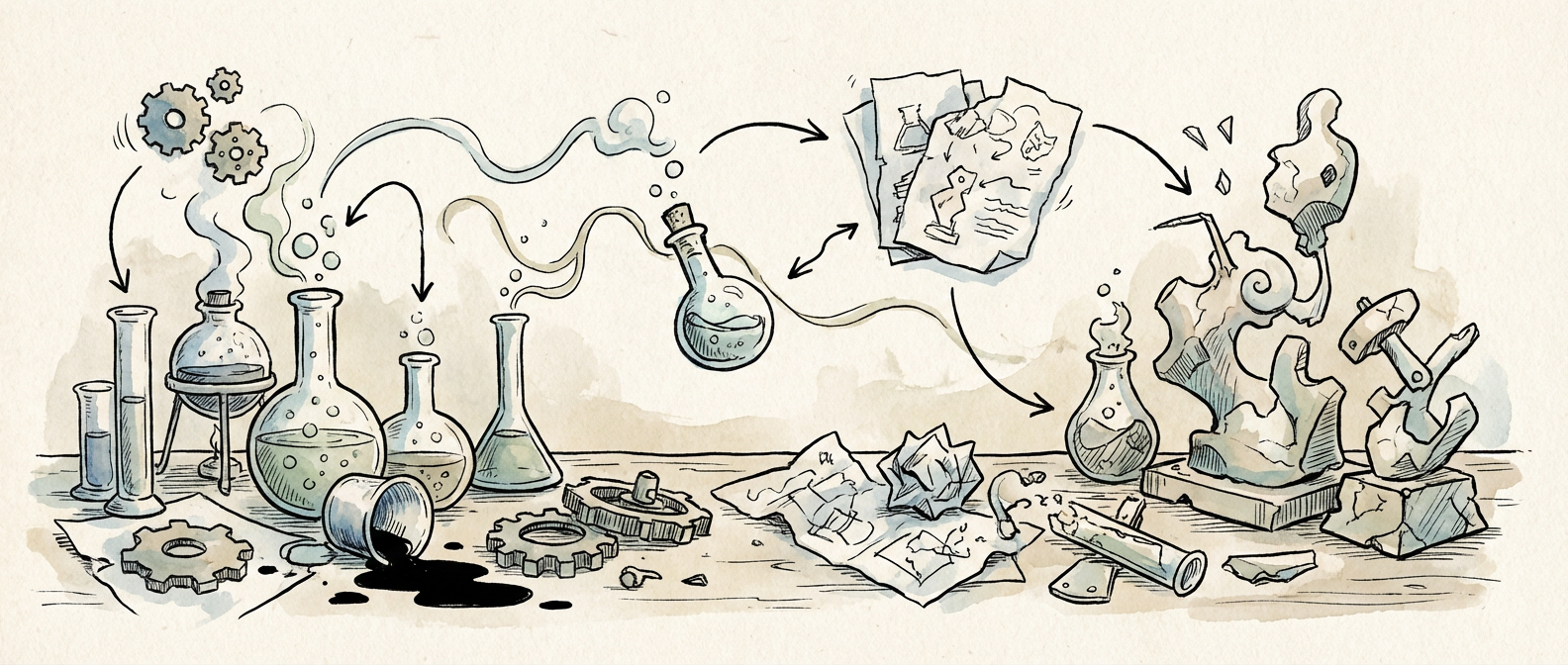
Last Tuesday, I spent four hours making what can only be described as the world’s ugliest ceramic bowl. The rim wobbled like a drunk person walking a sobriety test. The glaze pooled in weird spots that looked suspiciously like continents I couldn’t name. When I lifted it from the kiln, a piece of the bottom literally fell off onto my shoe.
Why You Should Start a Failure Journal (And What Mine Taught Me About Creative Block)

Instead of tossing it in the trash like a reasonable person, I took a photo and wrote three pages about it in what I’ve started calling my failure journal. Best creative decision I’ve made all year.

Here’s the thing nobody tells you about creative experiments: the failures teach you more than the successes ever will. But only if you pay attention to them. Most of us are so busy moving past our flops that we miss the goldmine of information sitting right there in the wreckage.

Illustration for Why You Should Start a Failure Journal (And What Mine Taught Me About Creative Block)

What a Failure Journal Actually Looks Like

Before you start picturing some leather-bound tome of artistic suffering, let me set the record straight. My failure journal is a beat-up composition notebook I bought at the drugstore for $2.99. The pages are filled with terrible sketches, half-baked ideas, and honest assessments of what went sideways.

Each entry follows the same loose format: What did I try? What happened instead? Why do I think it failed? What would I do differently? Sometimes I add photos if the failure is particularly photogenic. That wonky bowl earned a full page spread.

The magic isn’t in the format though. It’s in the act of sitting with disappointment long enough to understand it. When you’re forced to write about why something didn’t work, you start noticing patterns. Maybe you always rush the final steps. Maybe you’re afraid to commit to bold choices. Maybe you’re working in the wrong medium entirely.

This practice works especially well for anyone who tends to abandon projects the moment they get difficult. Writers who delete entire chapters, painters who scrape canvases clean, musicians who start over every time they hit a wrong note. If you recognize yourself in that description, a failure journal will feel like having coffee with a friend who actually gets it.

The Unexpected Benefits of Documenting Disaster

Three months into this experiment, I’ve noticed something strange happening. I’m taking bigger creative risks. Not because I’m suddenly fearless, but because failure has become data instead of judgment. When you’ve already written about twelve different ways to mess up a watercolor painting, the thirteenth attempt feels less like walking a tightrope over shark-infested waters.

The journal also revealed patterns I never would have spotted otherwise. Turns out I consistently underestimate how long creative projects will take by exactly forty-seven percent. Every. Single. Time. Now I automatically build in buffer time, and suddenly I’m finishing things instead of abandoning them when they don’t match my unrealistic timeline.

But the biggest surprise? Reading old entries has become a weird form of entertainment. That ceramic bowl disaster from last Tuesday already feels less like a defeat and more like the opening scene of a story I’m still writing. There’s something oddly comforting about having a record of all the times things went sideways and I survived anyway.

When Failure Becomes Your Creative Compass

Here’s where this gets really interesting. After documenting enough failures, you start to notice that some disasters point toward something better. That terrible bowl taught me I was fighting against the clay instead of working with it. Three bowls later, I made something that actually holds water without leaking onto my kitchen counter.

The key is learning to read failure like a map instead of a dead end sign. When a short story falls flat, the journal entry might reveal you were trying to squeeze three different plot lines into ten pages. When a song sounds muddy, writing about it helps you realize you were afraid to let any single instrument shine.

This approach works particularly well for people who are naturally analytical or who tend to spiral into self-criticism after creative setbacks. Instead of beating yourself up, you’re gathering intelligence. Instead of avoiding similar projects in the future, you’re building a database of what doesn’t work so you can navigate toward what does.

The failure journal isn’t about celebrating mediocrity or lowering your standards. It’s about getting comfortable with the messy middle part of creativity that everyone pretends doesn’t exist. It’s about recognizing that the gap between vision and execution isn’t a character flaw. It’s just where the interesting work happens.

Your Assignment, Should You Choose to Accept It

Start small. Grab whatever notebook is lying around and commit to documenting your next creative failure. Not your next creative project. Your next creative failure. The one that’s coming whether you plan for it or not.

Write about it like you’re explaining to a friend what happened. Skip the dramatic language and the artistic angst. Just describe what you tried, what happened instead, and what you think went sideways. Take a photo if it helps. Be specific about the details that made you want to throw things across the room.

Do this for a month and then flip back through your entries. I guarantee you’ll spot patterns you never noticed. Maybe you’ll discover you’re actually better at creative problem-solving than you thought. Maybe you’ll realize you’ve been trying to force your creative voice into shapes that don’t fit.

That ugly ceramic bowl is sitting on my kitchen windowsill right now, holding exactly nothing because it can’t hold anything. But it’s teaching me something new about accepting imperfection every time I wash dishes. Sometimes the best creative experiments are the ones that don’t work the way you planned.
Five Things I Quit That Actually Improved My Life (And Why You Might Want to Try It Too)

I Stopped Checking My Phone First Thing in the Morning

You know that thing where you wake up and immediately grab your phone like it’s going to run away? Yeah, I used to do that. Every morning started with a bombardment of notifications, news alerts, and whatever chaos had unfolded while I was unconscious. It was like mainlining anxiety before my feet even hit the floor.

Five Things I Quit That Actually Improved My Life (And Why You Might Want to Try It Too)

Now I keep my phone in the kitchen overnight and use an actual alarm clock. Revolutionary, I know. The first hour of my day belongs to me now. I make coffee, look out the window, maybe write a few sentences in my journal. It sounds ridiculously simple, but this tiny change completely transformed how I approach each day.

If you’re someone who feels frazzled before 8 AM or constantly behind before you’ve even started, try this. Your Instagram feed will still be there in an hour, but that peaceful morning headspace? That’s harder to recover once you’ve lost it.

Illustration for Five Things I Quit That Actually Improved My Life (And Why You Might Want to Try It Too)

I Quit Saying Yes to Every Social Invitation

For years, I thought being a good friend meant showing up to everything. Birthday parties for acquaintances, work happy hours, that random Tuesday trivia night someone mentioned once. I was exhausted and broke, but hey, at least I was socially available.

The turning point came when I realized I was saying yes out of guilt rather than genuine interest. I started asking myself a simple question: “Do I actually want to go to this, or am I just afraid of disappointing someone?” The honest answer was usually the latter.

Now I’m more selective, and paradoxically, I enjoy the social events I do attend so much more. I show up present and energized instead of resentful and tired. My real friends understood immediately. The ones who didn’t? Well, that told me something useful too.

This one’s for you if you find yourself overcommitted and under-enthusiastic about your social calendar. Quality over quantity isn’t just for Instagram captions.

I Stopped Trying to Keep Up With Every New Thing

Remember when everyone was suddenly into sourdough starters? Then it was indoor plants, then cryptocurrency, then whatever wellness trend was making the rounds. I used to feel this low-level anxiety about missing out on the latest thing everyone else seemed to have figured out.

The constant pressure to stay current was exhausting. I’d half-heartedly research topics I didn’t care about just to contribute to conversations I didn’t want to have. It was like being in a never-ending pop quiz for a class I never enrolled in.

These days, I let trends wash over me like background noise. If something genuinely interests me, I’ll explore it. If not, I trust that my life will continue just fine without knowing the difference between various types of kombucha or whatever productivity app everyone’s raving about this week.

This approach works best for people who are naturally curious but find themselves scattered across too many surface-level interests. It’s okay to go deep on a few things rather than skimming everything.

I Quit Explaining Myself So Much

I used to over-explain everything. Why I couldn’t make it to something, why I chose one restaurant over another, why I liked certain movies or books. It was like I was constantly defending my choices to some imaginary jury that was definitely going to find me guilty of having preferences.

The weird thing about over-explaining is that it often makes you sound less confident, not more. People can sense when you’re trying too hard to justify yourself, and it makes them question decisions they might have otherwise accepted without a second thought.

Now when someone asks why I can’t do something, I just say “I can’t make it, but thanks for thinking of me.” When someone questions my taste in music or food, I shrug and say “Different things work for different people.” It’s liberating to realize that most people don’t actually need or want a full dissertation on your reasoning.

If you’re someone who finds themselves writing paragraph-long text messages to decline simple invitations, this might resonate. Your choices are valid without a supporting essay.

I Stopped Buying Things I Might Need Someday

My closet used to be a graveyard of good intentions. Fancy workout clothes for the fitness routine I’d definitely start next month. Kitchen gadgets for the elaborate cooking phase that lasted exactly two weeks. Books I bought because I wanted to be the kind of person who had read them, even though I knew deep down I probably wouldn’t.

The “someday” purchases were the worst. That blazer for job interviews I wasn’t even applying for. Camping gear for the outdoor adventures I kept meaning to plan. Craft supplies for hobbies I thought I might pick up. My apartment was full of optimistic clutter.

Now I have a simple rule: I only buy things I need within the next month or things that will genuinely improve my current routine. It’s amazing how much space opens up, both physically and mentally, when you stop shopping for your imaginary future self.

This shift works particularly well for people who shop as entertainment or who struggle with buyer’s remorse. Your future self will thank you for the extra money and the cleaner space.

These changes didn’t happen overnight, and honestly, I still slip back into old patterns sometimes. But each small adjustment created a little more breathing room in my daily life. If any of these resonate with you, maybe pick one and try it for a week. I’d love to hear what you discover.

The Conversations That Changed How I See Everything (And Why Small Talk Isn’t the Enemy)

The Grocery Store Philosophy Lesson

I was standing behind this older man at Safeway last month, watching him count exact change for a $3.47 purchase. The cashier was visibly annoyed. The line was growing. People were sighing. Then he looked up and said, “Sorry folks, but when you’re on a fixed income, every penny matters.” Simple statement. No self-pity. Just fact.

The Conversations That Changed How I See Everything (And Why Small Talk Isn't the Enemy)
The Conversations That Changed How I See Everything (And Why Small Talk Isn’t the Enemy)

The woman behind me immediately softened and started chatting with him about grocery prices. Turns out he was a retired teacher who’d been shopping at that same store for thirty years. He knew which day they marked down the bakery items and exactly when the produce manager put out the discounted vegetables. He wasn’t being difficult. He was being smart.

That five-minute interaction completely changed how I think about impatience. Now when someone’s moving slowly or asking lots of questions, I wonder what I don’t know about their situation. Maybe they’re counting pennies for a reason. Maybe they’re asking questions because they can’t afford to make the wrong choice. It’s made me a more curious person and, honestly, way less judgmental. Sometimes the conversations that stick aren’t deep philosophical exchanges. They’re just reminders that everyone’s fighting a battle you know nothing about.

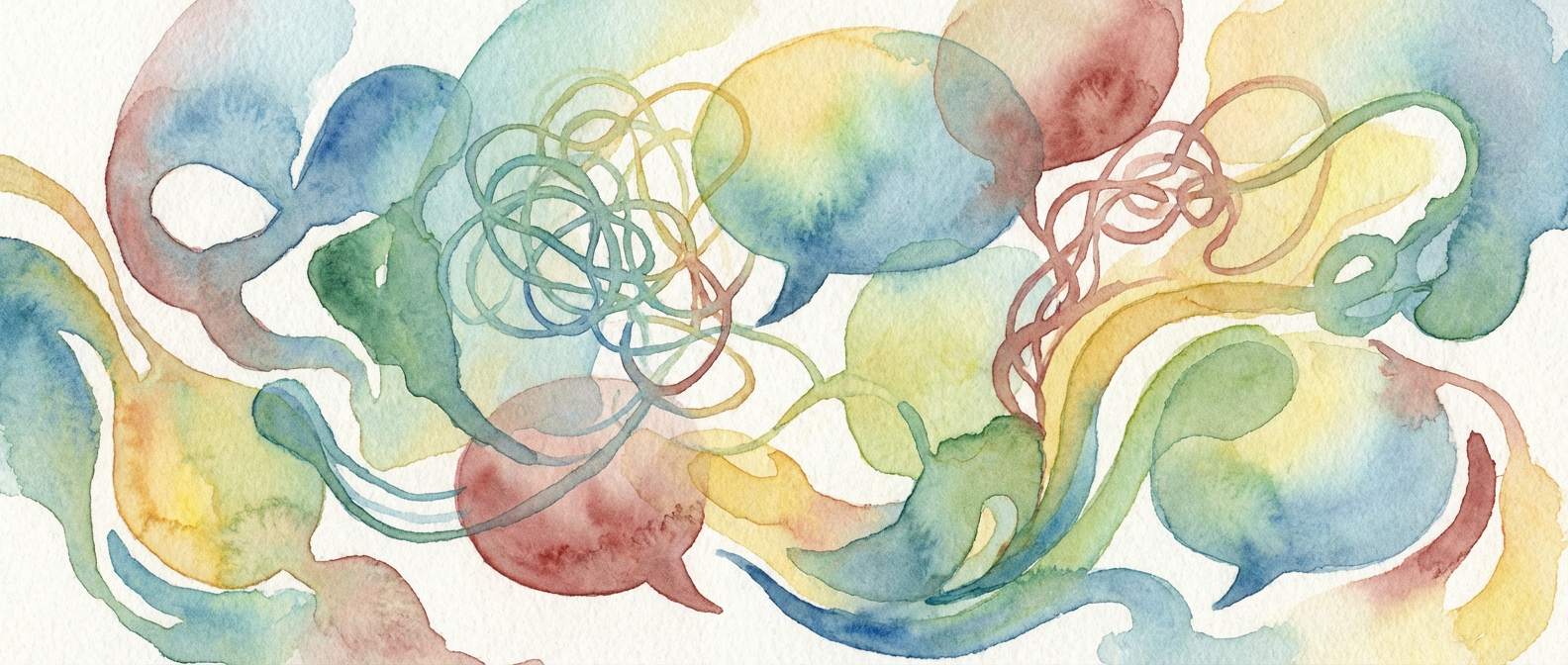
Illustration for The Conversations That Changed How I See Everything (And Why Small Talk Isn't the Enemy)
Illustration for The Conversations That Changed How I See Everything (And Why Small Talk Isn’t the Enemy)

Why I’m Done Avoiding Small Talk

Here’s my unpopular opinion: small talk is actually pretty great, and people who dismiss it as meaningless are missing something important. I used to be one of those people who rolled their eyes at weather conversations and elevator pleasantries. I wanted deep discussions about existential crisis and political theory. I thought surface-level chat was a complete waste of time.

Then I met Maria at my neighborhood coffee shop. She’s the barista who always asks how my day is going, and I always figured she was just being polite. One particularly rough Tuesday, I actually answered honestly instead of giving the standard “fine, thanks.” I told her I was stressed about a work deadline and felt like I was drowning.

She listened. Really listened. Then she shared that she was dealing with her own work stress while going to nursing school at night. We talked for maybe three minutes, but it was the most grounded I’d felt all week. Now we have these brief but real check-ins every time I come in. It’s not deep conversation, but it’s genuine connection.

Small talk isn’t the problem. Robotic small talk is the problem. There’s a huge difference between asking “How are you?” as a social reflex and asking because you actually want to know. The conversations that have stuck with me most aren’t always the profound ones. Sometimes they’re the simple ones where someone saw me as a human being worth acknowledging, not just another customer in line.

The Uber Driver Who Made Me Rethink Success

I got in an Uber after a particularly brutal workday, probably looking like I’d been run over by a bus. The driver, Ahmed, asked what I did for work. I gave him the standard spiel about marketing and client management, expecting the usual polite nod. Instead, he started asking follow-up questions. Real ones. He wanted to know if I enjoyed it, whether it felt meaningful, how I dealt with difficult clients.

Turns out Ahmed had been an engineer in Syria before immigrating. He was driving Uber while studying to get his credentials recognized here. He talked about his work with this quiet pride, explaining how he was learning American business culture through these conversations with passengers. He said every ride taught him something new about how people here think about work and success.

I left that car thinking about how we define professional achievement. Here was someone rebuilding his entire career from scratch, treating a temporary job as graduate-level research in human behavior. Meanwhile, I was complaining about email overload and boring meetings. Ahmed wasn’t bitter about starting over. He was strategic about it.

That conversation made me realize how narrow my definition of success had become. It also made me more intentional about my own work. If someone can find meaning and learning opportunities in driving strangers around a city, I can probably find something valuable in whatever I’m griping about. It’s embarrassing how much I needed that perspective check.

The Argument That Taught Me When to Walk Away

Not all memorable conversations are pleasant ones. Last year, I got into a heated argument with a family member about politics. It started as a casual comment and escalated fast. We both got defensive, voices raised, feelings hurt. The whole thing was exhausting and accomplished exactly nothing.

But here’s what stuck with me: the moment I realized we weren’t actually trying to understand each other anymore. We were just trying to win. I was mentally preparing my next counterargument while he was still talking. He was doing the same thing. We’d stopped listening and started performing for an audience of zero.

That fight taught me to recognize the difference between productive disagreement and ego-driven debate. Now I pay attention to my motivations during difficult conversations. Am I trying to learn something or prove something? Am I curious about the other person’s perspective or just waiting for my turn to demolish their points?

Sometimes the most important conversations are the ones you choose not to have. Sometimes walking away isn’t giving up. It’s recognizing that not every hill is worth dying on, and not every argument deserves your energy. That realization has saved me countless hours of frustration and probably a few relationships too.

What These Conversations Have in Common

Looking back at the interactions that have genuinely changed how I think, they all share one thing: someone was being authentically themselves. The grocery store man wasn’t apologizing for his circumstances. Maria wasn’t pretending to be cheerful when she was stressed. Ahmed wasn’t hiding his pride in his work, even though it wasn’t his dream job. Even that family argument was memorable because we both dropped our filters completely.

These weren’t conversations with famous people or experts or thought leaders. They were just honest moments with regular humans who weren’t trying to impress anyone. That’s probably why they stuck. In a world where everyone’s curating their image and optimizing their personal brand, genuine interaction feels almost radical.

I’m curious about the conversations that have stuck with you. What random interaction changed how you see something? What disagreement taught you something about yourself? What piece of small talk turned into something unexpectedly meaningful? Sometimes the stories that matter most are the ones we think are too ordinary to share.

The Books That Ruined Me (In the Best Way)

Why I’m Done Pretending “To Kill a Mockingbird” Changed My Life

Let me start with a confession that might get me kicked out of every book club in America: “To Kill a Mockingbird” did absolutely nothing for me. I read it at sixteen, dutifully highlighted the parts about moral courage, and wrote a perfectly acceptable essay about justice and childhood innocence. But it didn’t change my perspective on anything except my growing suspicion that everyone else was having profound literary experiences I was somehow missing.

The Books That Ruined Me (In the Best Way)

The books that actually rewired my brain were the weird ones. The uncomfortable ones. The books that made me question whether I was the kind of person I thought I was. These weren’t the classics my teachers assigned or the bestsellers my friends recommended. They were the books that found me at exactly the wrong time, which turned out to be exactly the right time.

I’ve spent years watching people share their transformative reading experiences, and there’s this unspoken pressure to name something appropriately meaningful. Something that signals you’re thoughtful and well-read. But the truth is messier than that. The books that actually change you rarely come with warning labels or Oprah’s Book Club stickers.

Illustration for The Books That Ruined Me (In the Best Way)

The One That Made Me Realize I Was Kind of Terrible

“The Remains of the Day” by Kazuo Ishiguro hit me like a slow-motion car crash. I picked it up expecting a quaint story about English manners and got instead a masterclass in self-deception. Stevens, the butler narrator, spends the entire novel explaining away his complicity in his employer’s fascist sympathies, and I found myself nodding along with his justifications.

That recognition was horrifying. I realized I had my own collection of perfectly reasonable explanations for all the times I’d stayed silent when I should have spoken up. The times I’d chosen comfort over courage because it was easier to pretend I didn’t see what was happening right in front of me.

Ishiguro doesn’t judge Stevens, and that restraint made the book even more devastating. There’s no moment where the narrator suddenly sees the light and transforms into a better person. He just continues being exactly who he’s always been, with maybe the faintest glimmer of recognition that he might have made different choices.

I closed that book feeling like I’d been gently but thoroughly filleted. It took me months to stop seeing Stevens in every compromise I made, every conversation I avoided, every time I chose politeness over honesty. Some books give you heroes to admire. This one gave me a mirror I couldn’t look away from.

The Weird One That Taught Me About Love

“The Time Traveler’s Wife” is objectively problematic, and I will die on this hill while simultaneously defending it. Yes, the age gap issues are deeply uncomfortable. Yes, the premise has holes you could drive a truck through. And yes, it romanticizes some genuinely concerning dynamics that would be red flags in any real-world relationship.

But here’s what it taught me that no other book had: love isn’t a feeling that conquers all obstacles. It’s a series of small, daily decisions to keep choosing the same person, even when they’re impossible to live with. Even when they disappear without warning. Even when the fundamental circumstances of your relationship are completely insane.

Clare spends years loving someone who can’t control when he leaves or where he goes. She builds a life around uncertainty, makes peace with loneliness, and finds ways to be happy in the gaps between his visits. That’s not romantic in the way we usually think about romance. It’s more like a meditation on what it means to love someone whose needs you can’t meet and whose problems you can’t fix.

I read this book during a period when I thought love meant finding someone who would complete me, solve my problems, and make everything easier. Instead, it showed me two people who made each other’s lives infinitely more complicated and chose each other anyway, over and over again. That shift in perspective changed how I approached every relationship after.

The One That Made Me Stop Trying to Be Smart

“A Confederacy of Dunces” is supposed to be funny, and it is, but it’s also the most accurate portrayal of intellectual arrogance I’ve ever encountered. Ignatius J. Reilly is a walking caricature of every insufferable know-it-all who’s ever explained why everyone else is wrong about everything. He’s also, uncomfortably, a version of who I was becoming in my early twenties.

I’d fallen into the trap of thinking that reading difficult books and having strong opinions made me interesting. I collected intellectual positions like trading cards and deployed them in conversations to signal my sophistication. I was exhausting to be around, though thankfully no one told me this directly.

Watching Ignatius stumble through New Orleans, alienating everyone he meets with his pompous lectures and conspiracy theories, I saw my own worst impulses reflected back at exaggerated scale. The book forced me to confront an uncomfortable question: was I using my intelligence to connect with people or to distance myself from them?

The genius of the book is that Toole doesn’t make Ignatius completely irredeemable. There are moments when you glimpse the genuine pain and fear underneath all that bluster. But those moments don’t excuse the behavior, and they don’t make him any less insufferable. Sometimes the most compassionate thing you can do is admit that being smart doesn’t make you right, and being right doesn’t make you good company.

Why I Trust Books That Make Me Uncomfortable

The books that actually changed my perspective share one thing in common: they made me squirm. They held up mirrors I didn’t want to look into and asked questions I didn’t want to answer. They refused to let me off the hook with easy moral lessons or comforting platitudes.

I’ve noticed that the books we’re supposed to find transformative often feel safe in their wisdom. They confirm what we already know about right and wrong, good and evil, love and loss. But the books that actually transform us tend to be trickier. They operate in the gray areas where our certainties start to wobble.

These days, I pay attention to the books that make me defensive. The ones that make me want to argue with the author or explain why the narrator is wrong. Those are usually the books trying to tell me something I need to hear but don’t want to acknowledge. They’re not always great literature, and they’re not always right, but they’re willing to poke at the tender spots we usually protect.

What books have made you uncomfortable enough to change? I’d love to hear about the ones that caught you off guard, the ones you’re slightly embarrassed to admit affected you, the ones that felt more like personal attacks than entertainment. Because those awkward, messy reading experiences might be the most honest conversations we ever have about who we are and who we’re becoming.

Five Things I Quit That Actually Made Life Better (And Why You Might Want To Try It Too)

I Stopped Checking My Phone First Thing in the Morning

This one started by accident. My charger broke and I had to leave my phone in the kitchen overnight to charge. The first morning without that blue glow hitting my retinas before I even sat up properly? Revolutionary. Instead of immediately downloading the world’s problems into my barely conscious brain, I just lay there for a minute. Noticed the light coming through the curtains. Heard the coffee maker my roommate had set up the night before.

Five Things I Quit That Actually Made Life Better (And Why You Might Want To Try It Too)

Now I keep my phone in the kitchen on purpose. The first hour of my day belongs to me, not to whatever chaos happened on the internet while I was sleeping. I’m not saying I’ve become some zen morning person who does yoga at sunrise. I still stumble around like a confused zombie. But at least I’m a confused zombie with my own thoughts instead of everyone else’s anxiety.

This works best if you’re someone who tends to spiral into news doom or social media comparison before you’ve even had breakfast. If you’re naturally a slow starter who needs time to ease into the day, this change will feel like giving yourself permission to be human in the morning.

Illustration for Five Things I Quit That Actually Made Life Better (And Why You Might Want To Try It Too)

I Quit Explaining Myself to People Who Weren’t Really Asking

You know that thing where someone makes a comment about your choices and you immediately launch into a detailed defense? “Oh, you’re leaving already?” suddenly becomes a ten-minute explanation of your sleep schedule, tomorrow’s early meeting, and your commute time. I used to do this constantly. Justify my food choices, my weekend plans, my decision to skip events or leave early or not drink or whatever.

The revelation came when I realized most of these “questions” weren’t actually questions. They were just conversational filler or, occasionally, mild judgment disguised as curiosity. The person asking usually didn’t want or need my entire reasoning process. They were just making noise.

Now when someone says “You’re not staying for another round?” I just smile and say “Nope, heading home.” Full stop. No elaborate explanation about how I have to walk my neighbor’s dog or my early morning workout or my Netflix date with myself. The conversation moves on. Nobody cares as much as I thought they did about my choices, which was both humbling and incredibly freeing.

This is particularly useful if you’re a people-pleaser who exhausts yourself trying to make everyone understand and approve of your decisions. Save that energy for people who actually matter and actually asked.

I Stopped Buying Things Just Because They Were on Sale

I used to be the queen of “But it’s 70% off!” I had a closet full of clothes I never wore because they weren’t quite right but they were such a good deal. A kitchen drawer stuffed with gadgets that seemed brilliant at clearance prices but turned out to solve problems I didn’t actually have. The final straw was a bread maker that I used exactly once to make a loaf that tasted like cardboard.

The shift happened when I started asking myself one question before any purchase: “If this was full price, would I still want it?” Most of the time, the answer was no. Turns out a lot of my “bargain hunting” was just shopping with extra steps. I was spending money on things I didn’t really want just because the price made them feel like opportunities I couldn’t pass up.

Now my closet has fewer things that I actually wear regularly. My kitchen drawers close properly. I have more money because I’m not constantly bleeding small amounts on “deals” that weren’t actually dealing me anything useful. The math is stupidly simple but took me years to figure out: not buying something you don’t need is always a better deal than buying it cheap.

This mindset shift works especially well if you’re someone who gets a little dopamine hit from finding bargains but then never uses what you bought. Or if your space is feeling cluttered with good intentions and great prices.

I Quit Trying to Turn Every Interest Into a Side Hustle

For a while there, I couldn’t enjoy anything without immediately thinking about how to monetize it. Started making decent sourdough? Maybe I could sell loaves to neighbors. Got into watercolor painting? Etsy shop incoming. Organized my closet really well? Clearly I should become a professional organizer. The hustle culture brain rot was real and it was exhausting.

The problem with treating every hobby like a potential business is that you stop doing things just because they’re fun or relaxing or interesting. Everything becomes about productivity and profit potential. I found myself researching market demand for homemade bread instead of just enjoying the smell of yeast and the satisfaction of kneading dough.

Now I paint terrible watercolors with no intention of selling them to anyone ever. I bake bread because the process is meditative and the result is delicious, not because I’m building a brand. I read books without thinking about how I could turn my thoughts into a book review blog. Some things are allowed to just be hobbies. Some skills are allowed to just be for me.

This approach is gold if you’re someone who feels guilty about “unproductive” time or if you’ve been influenced by the idea that every passion should become a paycheck. Sometimes the most valuable thing you can do is nothing that creates value for anyone else.

I Stopped Saving Things for Special Occasions

I had fancy soap that sat untouched for two years because I was saving it for the “right time.” Good wine collecting dust because no occasion felt special enough. A beautiful notebook I couldn’t bring myself to write in because what if I wrote something dumb and ruined it? This is probably the most ridiculous way to live, treating your own life like you’re not worthy of the good stuff you own.

The mindset flip happened on a random Tuesday when I decided to use the expensive face mask I’d been hoarding. It felt so nice that I got annoyed with myself for waiting months to experience something I already owned. Now I use the good soap, drink the nice wine on weeknights, and write grocery lists in pretty notebooks. Tuesday night dinner gets the cloth napkins. My regular morning coffee gets served in the mug I used to reserve for “special occasions.”

This works if you’re someone who tends to defer your own enjoyment or if you have a scarcity mindset about good things. Your life is happening right now, not someday when you’ve earned the right to enjoy what you already have. The special occasion is being alive today.

What things have you quit that surprised you with how much better life got? I’m always collecting new ideas for stuff that’s worth stopping, especially the things that seem harmless but slowly drain your energy. Let me know what’s made it onto your “quit it” list.

« Older posts Newer posts »

© 2026 Chantelhobbs

Theme by Anders NorenUp ↑