Personal essays, notes, and ideas worth sharing.

Month: March 2026 (Page 1 of 9)

The Week I Almost Quit Quitting: What Dry January 2026 Taught Me When the Rules Changed

Starting With the Weight of New Words

I wasn’t supposed to do Dry January this year. That was the plan, anyway. After the WHO released its updated stance in early 2026, reaffirming what researchers have been quietly suggesting for years—that there is genuinely no safe level of alcohol consumption—something shifted in me. Not dramatically. More like the small click when you finally adjust a picture frame that’s been bothering you for months.
The Week I Almost Quit Quitting: What Dry January 2026 Taught Me When the Rules Changed

The new guidance wasn’t shocking so much as clarifying. The organization had previously suggested moderate drinking might be fine, a position that had given millions of us (okay, let’s be honest, me) a comfortable middle ground to stand on. But the WHO 2026 global alcohol and health report wasn’t interested in comfortable middle ground. It was straightforward: the safest amount is zero. Not “moderate is probably okay.” Not “one glass of wine with dinner is fine.” Zero.

I read it on a Tuesday morning with my actual coffee, the kind without alcohol, and thought: well, I’ve been meaning to try Dry January anyway. Seemed like the moment had arrived.

The Setup: When Everyone Else Does It Too

What I didn’t anticipate was the company. The participation numbers hit records this year. Over nine million people across the UK alone registered for Alcohol Change UK Dry January 2026. Nine million. That’s not a niche health experiment anymore. That’s your mum, your coworker, the guy at the farmers market who always seems composed, your best friend who you thought would never give up wine. It’s suddenly everywhere and nowhere at once. You notice it because you’re all noticing it together, silently, in your own separate living rooms.

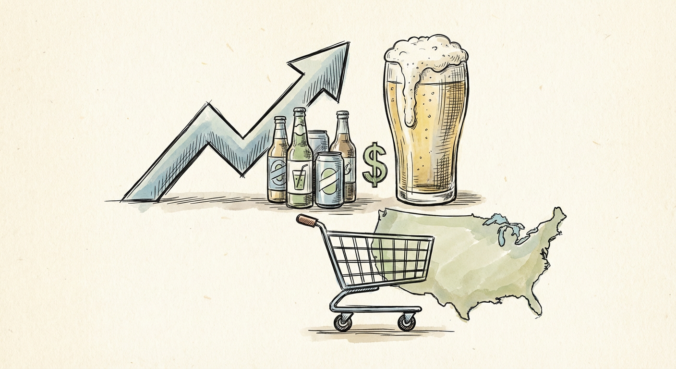
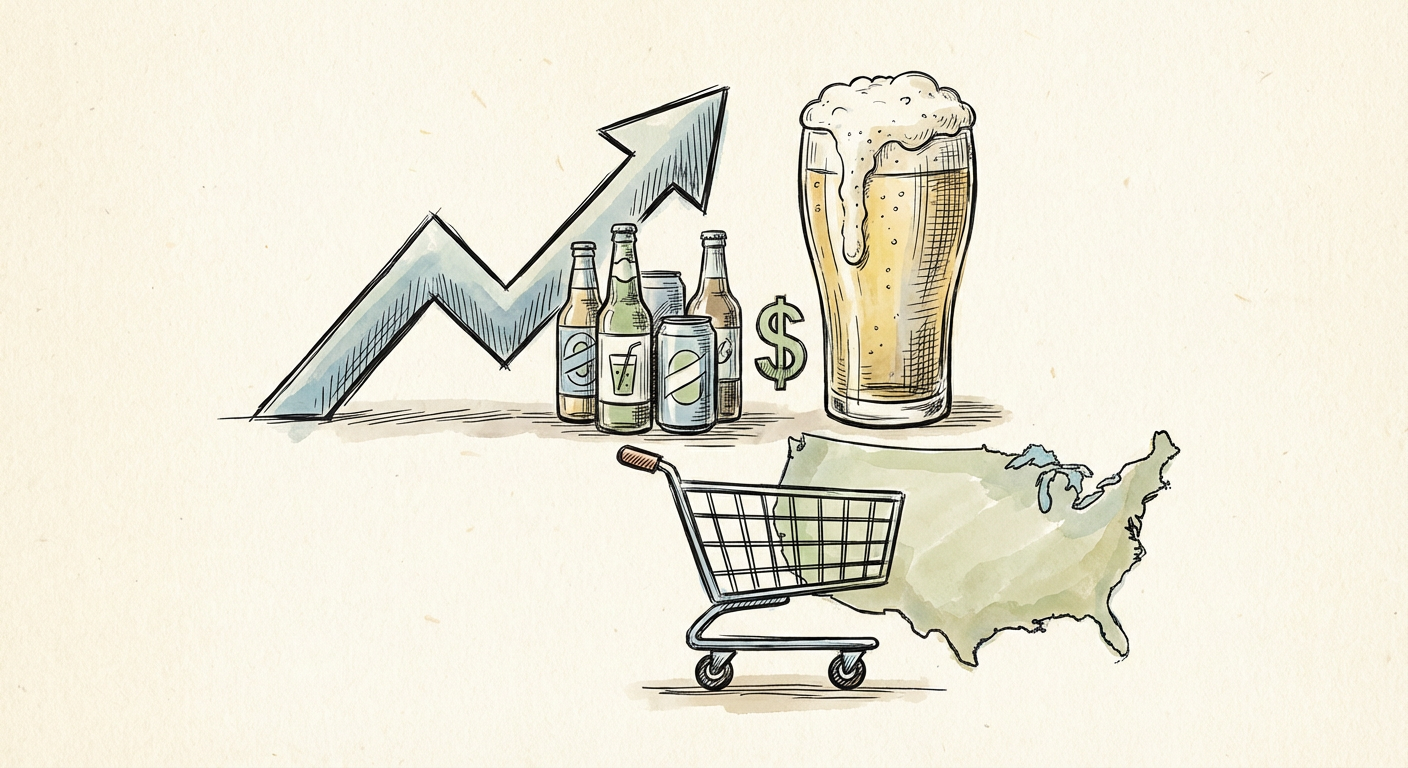
The absence of alcohol becomes a presence when you’re part of something this large. There’s a strange comfort in that. You’re not the weird one not drinking at the New Year’s party. You’re one of millions making a conscious choice. The non-alcoholic beverage industry had already picked up on the momentum; sales in the US grew by 35% year-over-year in 2025, reaching nearly seven hundred million dollars. Which means when you go looking for alternatives, they actually exist now. Real alternatives. Not just sparkling water pretending to be something else.

I bought a bottle of a non-alcoholic spirit made from botanicals. It tasted like possibility, or maybe like gin without the hangover. Either way, I felt prepared.

Day Seven to Day Twenty-Eight: The Architecture of Habit

The first week was easy. Too easy, which should have warned me. My body felt lighter almost immediately. I slept better. The headaches I’d stopped noticing were suddenly gone. I remember thinking this was going to be straightforward, one of those things people make harder than it needs to be through overthinking.

Then came Week Two, and with it, the first genuine test. A friend’s birthday. Not just any birthday—the kind where everyone meets at a wine bar, because of course we do, because that’s what we’ve always done. I showed up with my non-alcoholic option, which the bartender handled like I’d asked him to defuse a bomb. He was kind about it, but there was this micro-hesitation, like he was unsure if people like me existed in his bar. We do now, apparently.

What struck me wasn’t the wanting. I didn’t particularly want a glass of wine. What struck me was the social choreography of it all. The way people’s attention didn’t quite land on me the same way. Or maybe that’s not fair. Maybe I was hyperaware of not drinking, so everyone else seemed hyperaware of it too. The research backs up something interesting here: a 2025 study published in the British Medical Journal found something counterintuitive. People who completed a month of abstinence were actually six times more likely to return to moderate drinking by August than those who never attempted it at all. The act of stopping didn’t necessarily mean stopping stays.

I read that statistic around Day Fourteen and felt something close to relief. Permission, almost. If most people went back to moderate drinking anyway, then this didn’t have to be a permanent transformation. It could just be a month. A controlled experiment. That reframing helped, though I didn’t realize how much I needed it until I stopped needing it.

The Breaking Point That Didn’t Break

Day Twenty came and I nearly quit. This is the part I want to be really honest about, because I think we don’t talk about this enough. I was at work, frustrated by something minor, something that doesn’t matter now. My throat was tight and my shoulders were tense and I thought very clearly: I could just have a drink. Not a series of drinks. Just one. To take the edge off. To reset.

That’s where the whole thing nearly collapsed for me. Not at the party. Not at dinner with friends who were ordering wine. At the mundane moment when I realized I’d been using alcohol as a pressure valve without really noticing it. The realization was uncomfortable. More uncomfortable than the craving, which is saying something.

I didn’t have a drink. I went for a walk instead, which is the kind of cliched advice that actually works, it turns out. And I called a friend who was also doing Dry January and we admitted to each other that this part—the boring middle part, not the exciting start or the triumphant end—was harder than expected. She’d had the same moment on Day Nineteen. We were oddly comforted by the symmetry of our struggles.

What I didn’t mention to her, but I’m mentioning to you now, is that during that same week I got blood work done for an unrelated reason. My liver function looked better than it had in years. A 15% reduction in liver fat, my doctor said casually, as though I hadn’t just spent three weeks learning how much I’d been asking that organ to do. Research from 2025 had shown exactly this—that one month of abstinence in moderate drinkers produced measurable improvements in liver fat and insulin sensitivity. I was living inside a study without knowing it. My body was the data point.

The End That Isn’t an Ending

February arrived and I was still not drinking. I hadn’t planned a big celebration for Day Thirty. There was no moment where I popped a cork (metaphorically) and declared victory. It just continued. I noticed I was sleeping better, thinking more clearly, saving money. I also noticed I was more aware of why I used to drink—not physically dependent, but emotionally reliant. For decompression. For courage at parties. For marking the difference between work and rest.

I don’t know yet if I’ll continue past this month. I’m genuinely undecided, and I think that uncertainty is more honest than false resolve. The statistics suggest I’ll probably go back to moderate drinking at some point, and maybe that’s okay. Or maybe I’ll surprise myself. Still figuring it out, which is the most real place any of us actually live—not at the finish line, but somewhere in the middle of becoming.

If you’re doing Dry January now or thinking about it, I’m curious what’s showing up for you. The easy parts are obvious. But what about the Week Two crisis? The moment you almost quit? Those details matter because that’s where the real insight lives, in the small spaces between intention and reality. I’d like to hear about it.
I Tried the Mediterranean Longevity Protocol for 8 Weeks and Mostly Failed in Interesting Ways

The Setup: Why I Fell for the Headlines

It was late January when I read about the PREDIMED-Plus trial results. You know how these things work—a study lands, the internet catches fire, and suddenly everyone’s talking about a 24% reduction in major cardiovascular events. The mechanism seemed almost boring in its simplicity: energy-reduced Mediterranean diet plus physical activity. Not a supplement. Not a biohack. Just food and movement, tracked over five years with actual human subjects in the real world.

I’m not usually the type to jump on trending health protocols. But something about the specificity got me. The PREDIMED-Plus trial results in The Lancet showed results that weren’t marginal. They were the kind of numbers that make you think maybe I’m doing something wrong. So I decided to spend eight weeks actually following this thing. Not perfectly. Not with the kind of discipline that makes for an inspiring Instagram post. Just honestly, with a notebook, writing down what I was supposed to eat versus what I actually ate.

Week 1-2: The Olive Oil Incident and Initial Optimism

I started by buying olive oil. A lot of olive oil. This seemed reasonable because olive oil is basically the protagonist of the Mediterranean diet, and apparently the U.S. imported 28% more of it in early 2026 compared to the year before. Everyone was doing this. I felt like I was joining something.

The protocol calls for roughly 40% of your daily calories from vegetables and legumes. For context, the average American gets about 12% combined. I knew this intellectually, but knowing it and living it are different things. Week one I tried to jump straight to the target: giant salads, lentil soup, white beans with tomatoes. Day three I ate so much fiber I thought my stomach was filing a complaint.

The olive oil became a small obsession. I was using it on everything—drizzling it on toast, making vinaigrettes, pouring it over vegetables like I’d discovered fire. There’s something almost meditative about it, once you stop thinking of it as a condiment and start thinking of it as a food group. But I also noticed I was eating it out of compliance rather than pleasure. There’s a difference, and my body knew it.

Week 3-4: The Gap Between Sardinia and My Kitchen

By week three I was reading about the Blue Zones 2025 research and dietary findings, which had updated their data on where people were actually living the longest. Sardinia and Nicoya, Costa Rica—places where more than 70% of daily calories still came from whole plant foods in traditional patterns. These weren’t aspirational destinations. These were places where the diet wasn’t a choice. It was just what was available and what people had always eaten.

That hit differently. I wasn’t trying to follow a Mediterranean diet. I was trying to follow a Mediterranean diet from my apartment in a city where fresh figs cost fifteen dollars a pound and half the grocery store is optimized for convenience. The protocol assumes a certain relationship with food—time, access, proximity to markets. I had a spreadsheet and good intentions instead.

Week four is when I realized I was eating too much fish. The protocol recommends it, so I’d bought salmon and anchovies and these beautiful sea bream fillets from the fancy market. But I was eating them out of obligation, checking a box. I don’t actually cook fish well. I never have. So I stopped and went back to eggs, beans, and nuts. The diet immediately felt more sustainable because it felt more like me.

Week 5-6: Depression, Legumes, and Small Revelations

Around week five something shifted. A 2025 meta-analysis covering 32 studies found that Mediterranean diet adherence was associated with a 33% lower risk of depression compared to Western dietary patterns. I wasn’t expecting this to matter much to me personally. But I started noticing small things. My mood was steadier. I wasn’t having the 3 p.m. crash that usually sent me looking for something with sugar in it. My sleep was different—not miraculous, but different.

I think the legumes did this. There’s not a ton of glamour in chickpeas and lentils, but once I stopped treating them as a means to an end and started just cooking them well, they became the framework for everything. Hummus as breakfast, minestrone as lunch, a slow-cooked beans-and-greens situation as dinner. The variety was smaller than I expected, but the repetition was oddly comforting.

Week six I invited a friend over and made pasta with tomatoes, garlic, and white beans. Nothing fancy. But in the middle of eating it, I realized I wasn’t thinking about the protocol at all. I was just eating something that made sense. That distinction matters more than it sounds.

Week 7-8: What Actually Stuck, and What Didn’t

By week seven I’d abandoned some parts of the protocol entirely. The calorie restriction, for instance. The PREDIMED-Plus study called for energy reduction, which sounds clinical because it is. I tried tracking calories for exactly four days before deciding that particular experiment was adding more stress than benefit. I kept the food patterns but ditched the math.

What did stick: the vegetables. Somehow, eight weeks in, I was genuinely eating more vegetables than I used to. Not 40% of my calories—I’d estimate I’m closer to 25%—but it’s a shift. The legumes stayed. Olive oil became normal rather than noteworthy. I was moving more, but that’s also because I wasn’t sitting on the couch stressed about whether I was doing the diet right.

I didn’t lose weight. I didn’t measure my cardiovascular markers. I can’t tell you if I reduced my risk of a major cardiac event by 24% because that’s not how evidence works on an individual level. But I can tell you I feel steadier. My digestion is better. I’m not hungry all the time. I’m not white-knuckling through meals.

The honest version is this: I followed a Mediterranean longevity protocol for eight weeks and did approximately 60% of it correctly, modified another 30% to fit my actual life, and abandoned the remaining 10% because it was making me miserable. The results are incomplete. The process is still ongoing. The people in Sardinia and Nicoya aren’t following a protocol. They’re living a life that happens to be built around whole foods and movement and time. That’s less sexy as a headline, but it’s also more true.

If you’re thinking about trying this: start smaller than you think you should. Add things rather than restricting. Notice when you’re eating out of compliance versus pleasure, and trust that distinction. And maybe don’t buy all the olive oil at once. I’m still working through mine.

I Tried Virtual Body Doubling for Six Weeks and I’m Not Mad About It

The Experiment Nobody Asked For

I want to be clear about something upfront: I’m not someone who typically jumps on productivity trends. I’m the person who sees a TikTok about the perfect morning routine and immediately goes back to bed. But six weeks ago, I found myself genuinely stuck. My home office had become this weird productivity black hole where hours disappeared into nothing, and I couldn’t figure out why. So when a friend casually mentioned she’d been using something called “body doubling” to get work done, I did what I always do when confused: I Googled it at 11 PM and immediately regretted everything.

For the uninitiated, body doubling is just what it sounds like. You work alongside someone else, usually virtually, in real time. They’re not helping you with your task. You’re not collaborating. You’re just existing in the same digital space while you both do your own thing. It’s like having a study buddy, except the study buddy is a stranger on the internet and everyone’s got their camera on. When I first read about it, my honest thought was: this is the saddest thing I’ve ever heard. But I was desperate enough to try it anyway.

Why This Thing Actually Works (The Science Part, Briefly)

Here’s where it gets interesting. The psychological mechanism behind body doubling isn’t new. ADHD researcher Dr. Edward Hallowell first described it formally back in 1994 in his book “Driven to Distraction,” but it’s basically this: when someone else is present, even virtually, your brain stops giving you permission to procrastinate. There’s a gentle accountability that shifts your nervous system. You’re less likely to open Twitter for “just five minutes” when another human is watching you work. It’s not harsh or judgmental. It’s just there.

The data backs this up in a way that surprised me. A 2025 study from UC Santa Barbara found that virtual body doubling sessions increased task completion rates by 24% for people who reported attention difficulties. That’s not nothing. It’s not a magic cure, but it’s a real difference. And according to the Microsoft Work Trend Index 2025, 41% of remote workers identified loneliness and accountability as their top productivity challenges. The math was right there. I wasn’t broken. I was just lonely in a way I didn’t recognize as loneliness.

My Slightly Embarrassing Journey Through Various Platforms

I started with the biggest player in the space: the Focusmate virtual body doubling platform. They’ve got half a million users logging over 8 million co-working sessions monthly, which felt simultaneously massive and deeply nerdy. I booked my first 25-minute session with absolute dread. What if I was bad at body doubling? What if I just sat there sweating? What if the other person hated me?

None of those things happened. Instead, I got matched with someone named James who was apparently trying to organize his garage. We didn’t talk beyond a quick hello. We both turned our cameras on, waved, and got to work. He organized. I wrote. Thirty-five minutes later, I’d finished something I’d been avoiding for two weeks. Was it because of James specifically? No. Was it because some random person on the internet was quietly working beside me? Absolutely.

I tried a few other platforms too. FlowClub raised 6 million dollars recently off 200% year-over-year growth, which tells you something about how many people are hungry for this. I tested it out. Same vibe. Different people, similar results. The pattern became obvious pretty fast: when I showed up for body doubling sessions, I got stuff done. When I tried to work alone at home the next day, the paralysis came back.

The Uncomfortable Truth I Discovered

The weirdest part of six weeks of body doubling wasn’t the awkwardness of working with strangers on camera. It was realizing how much of my productivity problem wasn’t actually about me being lazy or broken. It was about isolation. I’d spent years working from home thinking I was just undisciplined when actually I was depressed in a very specific, undiagnosed way. Remote work can be amazing. It can also be lonely as hell, and that loneliness shows up as procrastination and paralysis and the inability to start literally anything.

Body doubling didn’t fix my life or anything. I’m not here to oversell it. But it did something that surprised me: it proved that my problem was solvable without medication or therapy or a complete life overhaul. It was solvable with another human being in the room, even a virtual one. That felt important to understand about myself.

Who This Is Actually For

If you’re someone who works from home and feels like you’re fighting through quicksand every single day, body doubling is worth trying. If you have ADHD or attention difficulties and remote work feels impossible, it’s actively designed for you. If you’re the kind of person who thrives in coffee shops but can’t afford a coworking space, this is your answer. If you’re just lonely and haven’t admitted it to yourself yet, this might be your weird little community.

I’m not going to tell you this will change your life. What I will tell you is that it might change your Tuesday. Sometimes that’s enough to build on. There’s something quietly powerful about discovering you’re not broken, just in need of a different structure. If you’ve been stuck, if you’ve been wondering why working from home feels so hard, this is one small thing worth testing. The internet is full of strangers willing to sit quietly beside you while you get stuff done. That’s actually pretty beautiful, isn’t it?

Have you tried body doubling? I’m genuinely curious what happened if you did. Send me a note about it.

I Tried Apple Intelligence for 90 Days and Here’s What Nobody’s Telling You

The Honeymoon Phase Was Real, Then It Wasn’t

When Apple Intelligence rolled out in October 2024 with iOS 18.1, I was genuinely excited. Not the performative kind of excited you feel when you’re supposed to care about new tech. I mean the quiet, hopeful kind where you think maybe this time the AI thing won’t feel like a solution in search of a problem. I cleared my calendar that first week. I used every feature. I took notes. I wanted to be fair.

Here’s what happened: for about two weeks, it was genuinely useful. The Writing Tools feature handled email drafts. Notifications got summarized. There was a brief, shining moment where I thought Apple had figured something out that everyone else had missed. Then I hit the ceiling, and it was lower than I expected.

By week three, I was checking how often I actually used these features. Spoiler alert: the numbers were bad. Not unusable bad, but disappointing bad. The kind of bad that makes you wonder if you’re the problem or if the technology just isn’t there yet.

The Feature Everyone Loves But Nobody Actually Uses

The Writing Tools sound incredible on paper. Summarize, rewrite, proofread. It works across almost every app. You’re supposed to think this is revolutionary. The feature can take your passive-aggressive “thanks for finally getting back to me” and turn it into “I appreciate your response” with such confidence that you start questioning whether your original instinct was wrong. Spoiler: it usually wasn’t.

Consumer Reports ran a survey in March 2025 that found 61 percent of iPhone 16 users tried at least one Apple Intelligence feature. Here’s where it gets interesting: only 28 percent actually used these features weekly. That’s a drop-off most products would call a crisis. Yet everyone was acting like Apple Intelligence was supposed to be the future.

The problem isn’t that Writing Tools don’t work. They work fine. The problem is that they solve a problem you don’t really have if you know how to write. And if you don’t know how to write, you might not trust the suggestions anyway. It’s caught in this weird middle ground where it’s useful enough to include but not useful enough to rely on. It’s the beige paint of AI features.

The Moment I Realized Something Was Wrong

February 2025 was the tell. Apple integrated OpenAI’s GPT-4o directly into Siri, and ChatGPT downloads spiked 34 percent that week. Let that number sit with you for a second. Apple had been building toward this moment for months. They had over 300 million devices capable of running Apple Intelligence by their Q1 2025 earnings report. They’d invested heavily in the infrastructure. And when the moment came to use advanced AI reasoning, Apple essentially said “sure, use OpenAI’s instead.” Your phone will just hand off to their servers.

That’s not a flex. That’s an admission. Apple is essentially a delivery mechanism for OpenAI’s model wrapped in a privacy promise. Which is fine, honestly. Privacy matters. But it also means that whatever magic Apple Intelligence was supposed to be wasn’t ready. It still isn’t.

Think about what that looks like practically. You ask Siri something complex, and your phone sends it to the cloud, to OpenAI’s servers, gets the answer, and brings it back. That’s not on-device computing. That’s cloud computing with extra steps and a privacy wrapper. By spring 2025, when Apple Intelligence had expanded to over 100 languages and regions, I was realizing I was paying for the privilege of using someone else’s AI more smoothly.

Where It Actually Shines (And Where It Doesn’t)

I’m not here to tell you Apple Intelligence is useless. It isn’t. The notification summarization works well. Photo Search improvements are legitimately solid. The Reduce Interruptions feature actually reduced my interruptions, which sounds simple until you realize how rare that is in software. There’s real value in the boring stuff that works quietly in the background.

But here’s the honest part: that value isn’t worth the hype. It’s not transformative. It’s not even that impressive if you’ve spent any time with other AI tools. It’s competent. Competence at scale is still competence. It’s not magic.

The features that excited me on day one turned into features I forgot I had by week eight. The ones that stuck around are the ones that don’t require you to think about them. That’s valuable. That’s also not what people were promised. When you look at the Apple Intelligence feature overview, it’s painted as this grand transformation. In reality, it’s an incremental improvement with better integration.

The Unpopular Part

I think Apple Intelligence is fine. I think it will get better. I think the long-term direction is sensible, even if the execution is cautious to the point of being boring. But I also think we should stop pretending it’s revolutionary, because it isn’t. It’s a solid feature set that does what it says and doesn’t break anything. That’s actually a high bar in software. Most things break other things.

The gap between what was promised and what arrived isn’t unique to Apple. We’ve been living in a world where AI announcements come with all the drama of a Marvel movie trailer but the substance of a software update. Apple Intelligence is just more honest about it than most. At least the features actually work.

According to Consumer Reports tech satisfaction surveys, user adoption has been slower than expected across the board. The early adopters are satisfied but not evangelizing. The general population is cautiously waiting to see if any of this matters. Both groups are probably right.

If you have an iPhone and you’re curious, try it. The features are there. You might find something that genuinely improves your day. Most people won’t, and that’s okay. That doesn’t make it bad. It makes it average. In 2025, average AI integration feels like enough. Maybe that’s the real story nobody’s telling.

I Tested 7 AI Journaling Apps for 90 Days. Here’s What Actually Happened to My Writing.

The Setup: Why I Decided to Become a Lab Rat

January felt like the right time to get weird about journaling. Not in the sense of finally starting a journal (I’ve been doing that on and off since 2019), but in the sense of actually testing whether these AI-powered journaling apps I kept hearing about actually made me write more, or just made me feel like I was accomplishing something while scrolling through my phone. So I committed to 90 days, rotating through seven different apps, tracking my entries obsessively, and paying close attention to how the quality of my writing changed when a machine was suggesting what I should think about.

I Tested 7 AI Journaling Apps for 90 Days. Here's What Actually Happened to My Writing.
I Tested 7 AI Journaling Apps for 90 Days. Here’s What Actually Happened to My Writing.

The timing was strange too. The journaling app market basically exploded in 2025. Notion released their templated approach in late 2024 and now they’re sitting at over 2 million active users just for the journaling feature. Day One dropped a major redesign around mid-year with AI-powered reflection prompts that actually analyze your entry patterns. Meanwhile, the entire mental health app market hit $17.5 billion, and journaling apps were growing faster than any other subcategory at 22% year-over-year. The market is genuinely crowded now. I wanted to know if that crowding meant better tools or just more noise.

The Numbers: More Entries, Fewer Words

Here’s the thing about committing to track data for 90 days: you get results that are weirdly specific and not always what you expected. With AI prompts guiding me, I averaged 4.2 entries per week. Without them, staring at a blank page, I managed 1.8 per week. That’s a significant difference. The math is seductive: more than double the entries. You can see why people get excited about this stuff.

But then you look at the depth. My entries with AI prompts were 40% shorter on average. They were snappier. More structured. Sometimes more useful for the moment, honestly. But there’s something that happens when a prompt asks you “What challenged you today?” versus you just sitting with your own thoughts until something emerges. One approach is efficient. The other is sometimes messier and occasionally more true.

I wasn’t the only one noticing this trade-off. A study out of the University of Rochester landed right in the middle of my testing period, and they found exactly what I was experiencing: AI-assisted journaling pushed consistency up by 34% compared to blank-page journaling. But emotional depth scores dropped by 18%. It’s not that AI journaling is bad. It’s that it’s different in ways that matter depending on what you actually want from your journal.

The Specific Apps: What I Actually Used

I cycled through Day One (with their new 2025 redesign), Notion’s templates, two smaller apps I’ll call “Prompt Heavy” and “Minimalist,” plus three others I’ve honestly half-forgotten already. The ones that stuck were the ones that felt like they were having a conversation with me rather than administering a questionnaire.

Day One’s updated system was the most sophisticated. The reflection prompts pull from your actual history, so it might connect something you wrote about last month to something happening now. That’s not generic AI hand-holding. That’s actually useful. You can read more about Day One’s 2025 AI journaling features on their site, and I’m not exaggerating when I say the technical execution is genuinely thoughtful. The prompts feel earned rather than interruptive.

Notion’s approach was different. With over 2 million people using their journaling templates, they’re basically betting that structure and accessibility matter more than sophisticated AI. For a lot of people, they’re probably right. The templates are good. They work. They don’t try to be clever about it. I found myself using Notion when I wanted to capture information quickly but using Day One when I actually wanted to process something.

The Thing Nobody Talks About: Consistency Versus Honesty

Here’s what genuinely surprised me: I don’t think the goal should be maximum entries. I think the goal should be useful entries. And those aren’t always the same thing.

The 34% increase in consistency that the Rochester researchers found? That’s real and it matters for people who struggle with blank-page anxiety. For those people, having a prompt saying “What did you notice today?” is genuinely liberating. It removes the paralysis. You write something. You build momentum. You keep showing up. That’s valuable.

But I also noticed that around week six, something shifted. My entries got more rote. I was hitting the prompts more than I was actually thinking. It was like I’d optimized for the metric of “entries per week” rather than the actual thing I was trying to do, which was figure out how to live better. The apps made me more consistent, but they also made it easier to fake consistency. I could tell myself I was journaling when really I was just filling in answers.

Where I Landed (And What I Actually Still Use)

The 90 days ended. The streaks broke. Life happened. That’s maybe the most honest thing I can tell you about journaling: no app changes the fact that it’s a practice that requires you to actually show up, and sometimes you don’t.

What I kept: Day One for actual reflection, Notion for quick capture, and honestly a lot of paper for the stuff that matters most. I use the AI features sometimes. They’re useful. But they’re not magic, and I think a lot of the marketing around these apps implies that they are. If you want to write more, an AI prompt will probably help. If you want to understand yourself better, that still requires work that no machine can quite do for you.

The journaling market is booming for a reason. These tools are helping people capture their lives in ways that matter. You can check out Grand View Research’s mental health app market report if you want the full picture, but the short version is: there’s genuine innovation happening here. The apps are getting better at understanding what humans need from journaling. They’re still tools, not solutions, though. The interesting part is still up to you.

If you’ve tried any of these, I’m curious what stuck. Or if you’ve resisted the whole trend and kept a paper journal or just winged it without tracking anything at all. The 90-day experiment taught me that there’s no right way to do this, just the way that works for you and the way that doesn’t. Still figuring out which is which.

« Older posts

© 2026 Chantelhobbs

Theme by Anders NorenUp ↑