Personal essays, notes, and ideas worth sharing.

Month: May 2025

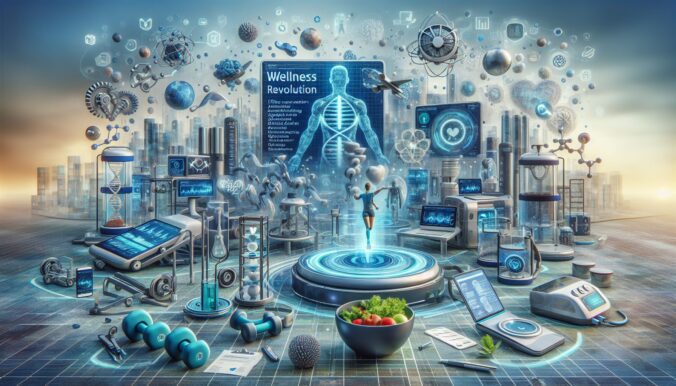
The Wellness Revolution: How Tech is Changing the Longevity Game

Hey tech enthusiasts! I hope you’re settled in with your favorite ultra-gourmet coffee blend because today we’re diving into an area that’s been getting quite the buzz—longevity. If someone had told me a decade ago that tech would be the Robin Hood of extra life years, I’d probably have given them a skeptical side-eye while sipping on an overpriced latte. Yet here we are, potentially on the brink of a health revolution thanks to some pretty wild new technology.

The Boring-Sounding, Exciting Field of Geroscience

First things first, let’s talk about the foundation of longevity tech—geroscience. Yeah, I know the name sounds like something straight out of a biology textbook that you probably used to nap on, but hear me out. Geroscience completely reimagines how we approach aging. Instead of just trying to delay it, scientists are treating aging like a condition we can actually fix. The philosophy is simple: understand how aging works so we can prolong the time you’re not just alive, but actually thriving.

Researchers are focused on this approach like never before. From cellular senescence to telomere extension, there are several paths being explored. Now, here’s where it gets mind-blowingly cool: much of this happens at the intersection of tech and medicine. You have your CRISPR crowd, with biochemists using it like a magic wand, editing genes to potentially slow down aging. Then there are AI-powered tools crunching massive amounts of data and revealing pathways we never even knew existed.

The Labs of the Future: Silicon Valley’s Latest Obsession

Alright, so maybe you’re wondering where all this magic happens. If I had to paint a picture, I’d say it’s like a hybrid of a classic mad scientist lab and a startup co-working space, packed with test tubes and perpetually restocked La Croix on tap. The tech overlords from Silicon Valley have definitely sunk their teeth into the longevity pie. Big companies like Calico and Unity Biotechnology are betting not just on extending human lifespan but also enhancing our healthspan—the period of life spent free from serious disease.

Imagine stepping into one of these labs and watching them tinker with proteins and pathways like they’re pieces in a high-stakes Jenga game. And with backing from some of the sharpest minds and deepest pockets, the prospects look pretty exhilarating.

Personalized Medicine: The Future is Here, and It’s Personal

Remember those futuristic sci-fi movies where characters would simply wave their hands in front of some flashy, beeping machine and get instant medical diagnoses? Well, folks, we’re inching closer to that reality, thanks to personalized medicine. This isn’t just about making healthcare cooler or better tailored—it’s about completely changing how we extend our lives.

Using data sets larger than your wildest Excel dreams, AI algorithms analyze everything from your genomic data to lifestyle habits, creating custom treatment plans. Suddenly, regular doctor visits feel as ancient as dial-up internet. With personalized medicine, longevity isn’t just some abstract target. It’s a real, achievable goal that these technologies are zeroing in on, one patient-specific calculation at a time.

The Big Ifs: Challenges and Ethical Tightropes

But let’s not get too ahead of ourselves. Every rose has its thorn, and longevity tech is no exception. For one, there’s the huge challenge of accessibility. Will this become a resource for the elite—a sort of techno-royalty—leaving the rest of us scrambling for crumbs like it’s Black Friday at a gadget sale? Groups advocating for wide accessibility are trying to ensure tech benefits everyone, not just those flaunting Rolexes.

Then there are ethical dilemmas popping up faster than you can say “synthetic biology.” If we could add extra decades to our lives, how would that change our societal structures, which are already stretched thinner than the latest iPhone? And dare we ask, what if AI messes with data enough to prioritize longevity over wisdom, creating centenarians who lack real life experience?

The Final Stretch: A Balanced Optimism

Even with all the hurdles, I’m genuinely excited about how these technologies could give us more meaningful years. It’s a complex, high-stakes puzzle we’re putting together, but if tech has taught us anything, it’s that where there’s innovation, there’s huge potential.

So there you have it, my fellow digital dreamers. Whether you’re a cynic worried about future dystopias or more of a ‘glass-half-full’ kind of person ready to sign up for a popsicle subscription in 2100, the longevity revolution is a wild mix of exciting possibilities and necessary caution.

Let’s keep questioning, dreaming, and tinkering, shall we? After all, our tomorrow might last longer than we ever thought possible. Cheers to that! 🌱

Riding the Quantum Wave: Is Quantum Computing Our Next Technological Messiah?

Hey fellow tech enthusiasts! Today, I’m diving headfirst into the weird and wonderful world of quantum computing. It’s a place where particles do the Humpty Dance and classical logic gets tossed out the window. If you think regular computers are fast, wait until we crack open the quantum box. You might just find your socks blown off to another dimension (hopefully not literally).

I’m Late! Or Am I Early?

First off, a confession: I’m a chronic procrastinator with a relentless tendency to be fashionably late to practically everything—except breakfast. But with quantum computing, I’m right on time! That’s because this quantum journey has only just started picking up speed. It’s shiny, it’s new, and it’s got that brand-new hyperspace smell: the frontier of computation where qubits frolic and superposition reigns supreme.

The Quantum Hype: Is It All Just Schrödinger’s Buzzword?

Alright, imagine you’re watching Netflix during your long-held tradition of Friday couch potatoing. Today’s chips-and-dips entertainment is the age-old debate: classical vs. quantum computing. Classical computers are like script-following actors—methodical, reliable, but sometimes a little slow when dealing with massively complex problems.

Enter stage left: Quantum Computing, swirling in with pizzazz like it’s auditioning for Cirque du Soleil. This wild, gravity-defying technology isn’t just faster. It completely changes how computation works by exploiting the funky laws of quantum mechanics. We’re talking zeroes and ones in tip-topsy superpositions, and quantum entanglement dishing out salsa moves that Einstein himself dubbed “spooky action at a distance.”

A Tale of Two Titans: Qubits vs. Classical Bits

Right-o, let’s dive deeper into the two main contenders here. Classical bits are the boring but stable underfunded heroes of our current computational era—always binary, always predictable, always either a zero or a one. But qubits? They’re the ultimate overachievers, thriving in the weird wilderness of both zero and one at the same time until someone does a reality check by measuring them.

This makes quantum computing ridiculously powerful. It’s like watching your wise octogenarian neighbors suddenly belt out the full Hamilton soundtrack—currently understudied by researchers, already praised by futurists.

Quantum Supremacy: Coming to a Future Near You

So, is quantum supremacy a reality? Not quite yet. And by “supremacy,” I mean the tantalizing milestone where quantum computers outperform classical ones on some practical problem. Google fired off a resounding “yes” in 2019 with Sycamore, claiming a 200-second feat on a calculation that would’ve taken the world’s fastest classical supercomputer 10,000 years. Talk about breaking the internet… or, ahem, the matrix.

However, as epic as these feats appear, they’re still more proof of concept than practical utility. Right now, it’s like finding buried treasure but lacking the key to open it because we still don’t fully understand how to leverage this incredible potential. Who said quantum wouldn’t be quirky?

The Quantum “Oh Crap” Moments

As spectacular as this sounds, the quantum journey isn’t without its hurdles. Coherence times are short—qubits are excellent at outsmarting your summer ice cream within minutes, melting under the heat of environmental interference. And let’s not forget error correction, the ever-persistent sidekick no one wants but everybody needs to tame the wild chariot of qubits.

Building a large-scale, fault-tolerant quantum computer is like trying to construct a skyscraper while balancing on a seesaw, all desperately hoping the blueprints drawn in crayon hold any water!

So What’s In Store, Oh Whimsical Future?

Fast forward a decade or two, and dream a little: we could see breakthroughs in pharmaceuticals, achieving in seconds what years of labor has only tiptoed towards. Cryptography as we know it might fall like a wet house of cards, requiring etch-a-sketch-worthy rewrites to keep your bank accounts safe.

And on a lighter note, I like to envision a world where simulators perk up our VR glasses to layer alternate realities mimicking Bowie-esque worlds… all at the push of the “quantumize” button.

Wrapping It All Up

So, there you have it, my techie amigos! Quantum computing is a roller-coaster ride still gathering its speed. Whether you choose to hop on now or clutch on for dear life as it whizzes by, one thing’s certain—there’s no backing away from what might become the masterpiece symphony of the Fourth Industrial Revolution.

And remember: if anyone says you’re late to understanding quantum computing, remind them anytime’s exactly the right time when you’re living in a state of quantum superposition, where time is—well, you know—relative. Cheers!

© 2026 Chantelhobbs

Theme by Anders NorenUp ↑