Personal essays, notes, and ideas worth sharing.

Month: March 2026 (Page 4 of 9)

The Great Return-to-Office Wars of 2026: Why I’m Actually Team Hybrid (Sort Of)

Remember When We Thought This Was Settled?

So here we are again. Just when I thought we’d moved past the whole “where should people work” debate, 2026 decided to serve up a fresh helping of office drama. Amazon dropped the hammer on their 1.5 million employees worldwide this January, demanding everyone return to the office five days a week. No exceptions, no negotiations, just good old-fashioned butts-in-seats management.

The Great Return-to-Office Wars of 2026: Why I'm Actually Team Hybrid (Sort Of)
The Great Return-to-Office Wars of 2026: Why I’m Actually Team Hybrid (Sort Of)

I’ll admit it: I used to be firmly in the “remote forever” camp. The pandemic taught us we could work from anywhere, right? Productivity stayed up, commutes disappeared, and suddenly everyone had time to actually see their families. It felt revolutionary. Progressive. Obviously correct.

But something funny happened while I was busy being right about remote work. The world kept moving, data kept coming in, and I started noticing things that didn’t fit my neat little narrative.

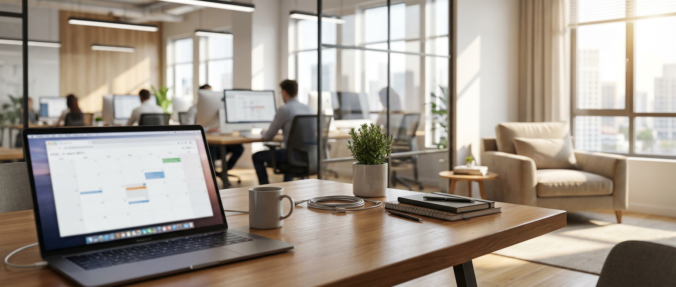
Illustration for The Great Return-to-Office Wars of 2026: Why I'm Actually Team Hybrid (Sort Of)
Illustration for The Great Return-to-Office Wars of 2026: Why I’m Actually Team Hybrid (Sort Of)

The Numbers Game Everyone’s Playing

Let’s talk about what’s actually happening out there. That Gallup remote work preferences poll from February showed that 42% of remote workers would quit if forced back to the office full-time. That’s not a small number. That’s nearly half the workforce saying they’d rather find a new job than return to cubicle life.

Meanwhile, commercial real estate is having what can only be described as an existential crisis. Vacancy rates hit nearly 20% in major cities during the first quarter of this year. The highest on record. Ever. Downtown cores that used to buzz with lunch crowds and after-work happy hours now feel like movie sets waiting for actors to show up.

But here’s where it gets interesting. Companies aren’t just throwing darts at a board when making these decisions. Fortune 500 companies increased their use of productivity tracking software by 267% last year. They’re watching. They’re measuring. And what they’re seeing makes them nervous about purely remote setups.

The Plot Twist I Didn’t See Coming

This is where I have to eat some humble pie. That Stanford hybrid productivity study from March delivered a result that made me pause mid-sip of my work-from-home coffee. Hybrid workers were 23% more productive than their fully remote or fully in-office counterparts.

Twenty-three percent. That’s not margin-of-error territory. That’s not statistical noise. That’s a real difference any business would be crazy to ignore.

I spent weeks trying to poke holes in this finding. Maybe the methodology was flawed. Maybe hybrid workers were just better at gaming the productivity metrics. But the more I dug into it, the more it started making sense in ways I didn’t want to admit.

The hybrid workers had the best of both worlds: focused deep work time at home and collaborative energy in the office. They weren’t burning out from isolation or getting lost in endless Slack threads. They weren’t stuck in conference rooms for meetings that could have been emails, but they also weren’t missing the spontaneous conversations that actually move projects forward.

What Changed My Mind (And Why That’s Okay)

Here’s what I’ve learned about changing your mind: it’s not a character flaw. It’s pattern recognition finally catching up with reality.

I started noticing things in my own remote-first life that I’d been explaining away. The projects that stalled because three quick in-person conversations got replaced by two weeks of email ping-pong. The creative breakthroughs that used to happen in hallway chats and now just… didn’t happen at all. The way junior colleagues seemed to be struggling without the osmotic learning that comes from working near more experienced people.

Don’t get me wrong. I’m not suddenly Team Office All The Time. The old model was broken too. Commuting two hours a day to sit in meetings that could have been video calls was never the pinnacle of human efficiency. But pretending that physical proximity adds zero value to knowledge work was starting to feel like willful blindness.

The hybrid model isn’t perfect, but it recognizes that work is more complex than either extreme wants to admit. Some tasks need focus and minimal interruption. Others need the energy and spontaneity that only happens when humans share physical space.

Finding Peace in the Messy Middle

So here’s where I’ve landed: Team Hybrid, with heavy emphasis on the “sort of” in my headline. Not because I think it’s the universal answer to everything, but because I think it’s the most honest answer to the question of how most knowledge work actually gets done best.

The companies getting this right aren’t the ones mandating arbitrary schedules or treating office time like punishment for remote work sins. They’re the ones figuring out which activities truly benefit from being together and which ones are better done in solitude. They’re designing office space for collaboration and leaving the focused work for home. They’re treating the office like a tool, not a monument to management’s need for control.

Will this perspective shift again as more data comes in? Probably. I’m trying to stay curious instead of defensive about that possibility. The future of work is still being written, and I’d rather be wrong and adaptable than right and stuck.

What’s your take on all this? Are you seeing the same patterns in your own work life, or am I missing something obvious? I’m genuinely curious how this is playing out beyond my own little bubble of experience.

The Corner Booth at Denny’s and Other Unlikely Sanctuaries

I used to think the idea of a place “feeling like home” was pure marketing nonsense. Real estate agents saying it. Travel bloggers writing it. People who clearly hadn’t spent enough time in genuinely uncomfortable spaces to know the difference. Then I found myself crying in a Denny’s at 2 AM because the corner booth felt safer than anywhere I’d been in months, and I had to reconsider everything.

The thing about places that feel like home isn’t that they’re beautiful or Instagram-worthy. It’s that they hold space for you without asking questions. That Denny’s booth didn’t care that I was twenty-three and falling apart. The fluorescent lights hummed the same tune they’d hummed for decades, the coffee was still terrible, and somehow that consistency felt like an anchor.

When Buildings Remember You Back

My neighborhood library has a reading chair on the second floor that creaks in exactly the same spot it did when I was twelve. The librarian, Mrs. Chen, still works the reference desk and still remembers that I prefer books about people who fix things. She’s never asked why I stopped coming for three years in my twenties, just smiled when I started showing up again with my own kid in tow.

I used to think this was just nostalgia, but there’s something more specific happening here. Some places develop a kind of institutional memory that includes you in it. They become containers for versions of yourself across time. The library holds my twelve-year-old self who read everything about engines, my college self who stress-studied for finals, and my current self who brings my daughter to story time. It’s not just that I remember being there. It’s that the place seems to remember me being there too.

The Unexpected Geography of Comfort

The first time I felt genuinely at home somewhere unexpected was in a hardware store in Portland. I’d been living there for six months and still felt like I was wearing someone else’s clothes. Then I walked into Rebuilding Center, a warehouse full of salvaged building materials, and something clicked. Maybe it was the smell of old wood and metal polish, or the way the volunteers explained things without making me feel stupid for not knowing the difference between a Phillips head and a flat head screwdriver.

I started going there not because I had projects, but because the place made sense to me in ways my expensive apartment didn’t. The retired contractor who worked Saturdays taught me to recognize good bones in old furniture. The art student who sorted hardware showed me how to match paint chips to rust stains. I learned more about making things work in that warehouse than I had in months of trying to figure out how to be an adult.

What I didn’t expect was how this changed my understanding of belonging. I’d always thought you had to earn your place somewhere, prove you deserved to be there. But the hardware store operated on different logic. If you showed up and weren’t actively destructive, you belonged. Simple as that.

The Politics of Feeling Safe

There’s no way to talk about places that feel like home without acknowledging that this feeling isn’t equally available to everyone. The corner booth at Denny’s felt safe to me partly because I’m white and present as relatively conventional. The library welcomed me back because I’d already established myself as someone who belonged there. The hardware store accepted me because I fit their demographic assumptions about who uses tools.

I started paying attention to this after watching my friend Marcus navigate the same spaces I moved through easily. Same library, different experience. Same coffee shop, different level of comfort. He pointed out things I’d never noticed: how the staff’s eyes tracked certain customers, how some people got lingering looks while others became invisible, how the geography of belonging was mapped along lines I’d never had to consider.

This doesn’t invalidate the feeling of home, but it complicates it. The places that feel safest to me might not extend that same comfort to others. And the reverse is also true. I’ve been the only white person in barbershops and community centers where the rhythm of belonging was different, where I had to learn new codes for fitting in.

Building Your Own Everywhere

The most interesting thing I’ve learned is how much control we actually have over creating these feelings. My friend Sarah, who moves cities every few years for work, has developed what she calls “the anchor strategy.” Within the first month anywhere new, she finds her coffee shop, her grocery store, her place to walk when she needs to think. She becomes a regular before she feels like one.

She showed me how much of feeling at home is about repetition and attention. Notice what the barista puts in your usual order. Learn the names of the dogs that frequent the park. Figure out which checkout clerk at the grocery store actually wants to chat and which one prefers efficient silence. These aren’t big gestures, but they’re the difference between being somewhere and belonging somewhere.

I’ve started doing this too, and it works better than I expected. The Thai restaurant where I order the same thing every Tuesday. The bookstore where I know which section gets new arrivals first. The walking path where I recognize the other early morning regulars. None of these places were designed to feel like home, but they’ve become that through practice and presence.

What Sticks

The corner booth at Denny’s got replaced during a renovation five years ago. The new booths are more comfortable and probably more sanitary, but they don’t hold the same weight. Mrs. Chen retired from the library, and her replacement is perfectly nice but doesn’t know my reading history. The hardware store moved to a smaller location across town.

But here’s what I’ve figured out: the feeling itself is transferable. Once you know what it feels like to be held by a place, you can recognize it again. You can even help create it. The new booth at Denny’s might not be mine, but I can sit in it anyway and remember that sometimes the most unlikely spaces make room for exactly what you need.

That’s the thing about places that feel like home. They’re not really about the places at all. They’re about the practice of showing up, of letting yourself be seen, of trusting that somewhere in the world there’s a corner with your name on it. Even if that corner is temporary, even if it’s not where you expected to find it.

The Ungraceful Art of Sucking at New Things

The Piano Bench Revelation

My left hand betrayed me again yesterday. I was trying to play a simple Bach minuet, the kind music teachers assign to show off how “accessible” classical music can be. My right hand knew exactly what to do, dancing through the melody like it had been practicing for months. My left hand, meanwhile, was having an existential crisis. It would hover over the keys, freeze mid-motion, then slam down on completely wrong notes with the confidence of someone who’d never heard music before.

I’ve been taking piano lessons for eight months now, and I’m still terrible. Not charmingly terrible or “getting there” terrible. Just regular, frustrating terrible. The kind where my teacher nods encouragingly while I murder Chopin, and I can see her mentally calculating how much she’s charging me to witness this weekly destruction of musical heritage.

The Democracy of Beginner’s Humiliation

Being bad at things as an adult hits different. When you’re eight and can’t ride a bike, everyone expects it. When you’re thirty-five and can’t make your fingers do two different things at once on a keyboard, it feels like a personal failing. I watch five-year-olds on YouTube playing Rachmaninoff while I’m still hunting for middle C, and I have to remind myself that comparing my day one to their year three is pure self-torture.

The piano isn’t my only venture into confident incompetence. I’ve been learning Spanish through an app that cheerfully congratulates me for remembering that “gato” means cat, while completely ignoring that I just built a sentence that roughly translates to “The happiness cat eats my Tuesday.” The app’s owl mascot looks increasingly concerned about my progress, which feels personally offensive.

Last month I tried rock climbing at the local gym. I made it approximately six feet up a wall marked “beginner” before my arms staged a mutiny. A twelve-year-old nearby was casually scaling something that looked like it required a PhD in physics and the grip strength of a gorilla. She offered me advice about “reading the route,” which was generous, considering I was still trying to figure out which end was up.

The Myth of Natural Talent

I used to believe that some people were just born knowing things. That musicians emerged from the womb humming in perfect pitch, that polyglots absorbed languages through their skin, that athletes came pre-installed with coordination software. This belief was convenient because it let me off the hook for never trying.

Watching myself fail repeatedly at the piano has changed this theory. My teacher mentioned she started playing at four and has been at it for thirty years. Thirty years. I’ve been learning for eight months and was getting frustrated that I couldn’t sight-read like she does. When she plays, her hands move with unconscious precision that comes from doing something ten thousand times. When I play, my hands move like they’re wearing oven mitts and trying to defuse a bomb.

The Spanish app occasionally shows me statistics about my “learning streak.” Even my most dedicated efforts add up to maybe fifteen minutes a day. Meanwhile, I expect to be conversational after a few months. It’s like expecting to run a marathon after jogging around the block twice. Mathematically impossible, but somehow I keep being surprised by my lack of progress.

The Unexpected Gift of Graceless Learning

Here’s what I didn’t expect: being bad at things is teaching me patience in a way that being good at things never did. When you’re naturally decent at something, you can coast on intuition. When you’re genuinely struggling, you have to break everything down into absurdly small pieces. I now know that playing piano isn’t just “moving your fingers.” It’s coordinating ten independent appendages while reading two lines of musical notation while counting beats while listening to what you’re actually producing while adjusting for timing and dynamics.

Rock climbing isn’t just “going up.” It’s learning to trust your feet, to read holds three moves ahead, to understand that your brain will lie to you about what’s possible. My first few attempts, I’d grab the wall like I was hanging from a cliff face in an action movie. Now I’m starting to understand that climbing is more like solving a vertical puzzle, where the solution involves believing your feet can hold your weight on what looks like a marble-sized bump.

Even my mangled Spanish is teaching me something valuable. Every time I completely butcher a sentence structure, I have to stop and think about how language actually works. Why do we put adjectives after nouns in Spanish but before them in English? How does anyone keep track of gendered articles? The mistakes force me to pay attention to patterns I’d never noticed in my own language.

The Long View of Incompetence

I’m starting to think that being bad at something might be more honest than being good at it. When you’re struggling, you can’t pretend that skill is magic. You see all the moving parts, all the places where things can go wrong, all the tiny adjustments that experts make without thinking. It’s like watching a building being constructed instead of just admiring the finished architecture.

My piano teacher keeps reminding me that everyone who’s good at this was once exactly where I am now. She showed me a recording of herself playing when she was twelve, and honestly, it was pretty rough. Not “cute rough” but “maybe find a different hobby” rough. Yet here she is, decades later, making complex pieces sound effortless.

I’m not sure I’ll ever be good at piano or Spanish or rock climbing. But I’m learning that the goal might not be competence anyway. Maybe it’s just the willingness to keep showing up to your own incompetence, week after week, and trust that something worthwhile happens in the space between trying and failing and trying again. Even if that something is just the piano bench revelation that your left hand has opinions of its own.

The Grocery Store Philosophy and Other Conversations I Can’t Shake

The Man Who Changed How I See Checkout Lines

Three years ago, I was behind an older man at Safeway who was buying exactly seven items: a single banana, a can of soup, bread, milk, eggs, coffee, and a newspaper. The cashier, probably seventeen and clearly having a rough day, accidentally double-scanned the soup. When she caught it and apologized, the man said something I still think about: “Don’t worry about it. I’ve been making mistakes longer than you’ve been alive, and I turned out okay.”

He wasn’t being condescending or fake-wise. He said it with this matter-of-fact kindness that made the whole interaction feel lighter. The girl smiled for what looked like the first time all day. I realized I’d been watching someone who got something I didn’t about how to move through the world without leaving unnecessary damage.

Why My Uber Driver’s Career Advice Was Actually Brilliant

Most people tune out when their rideshare driver starts talking about life philosophy. I usually do too. But last year, stuck in traffic near the airport, my driver Mohamed mentioned he’d been a mechanical engineer in Syria before coming to the US. When I asked if he missed it, he said something that rewrote how I think about work: “I fixed machines there. Here I fix people’s days. Same skills, different problems.”

He explained how engineering taught him to diagnose what’s really broken versus what just looks broken. In his car, he applied that to reading people. Stressed passengers usually weren’t stressed about the ride. Quiet ones often just needed space, not conversation. Chatty ones were working through something and needed to be heard. He’d become a different kind of problem-solver without realizing it, and he was genuinely good at it.

It made me reconsider this whole story we tell about “falling back” on jobs or “starting over.” Mohamed didn’t see his transition as a step down. He saw it as applying the same core skills to a different problem. That perspective shift has stuck with me through every career doubt since.

The Waitress Who Taught Me About Emotional Labor

At a diner in Portland, our waitress was handling a table of drunk guys who thought they were funnier than they were. She managed them with this surgical precision: firm enough to keep boundaries, warm enough to keep them happy, quick enough to minimize their impact on other customers. When they finally left, she came by our table and said, “Sorry about that circus. Some nights you’re the ringmaster, some nights you’re cleaning up after the elephants.”

What struck me wasn’t just her skill at managing difficult people, but her awareness of it as a skill worth naming. She wasn’t just “being nice” or “doing her job.” She was performing complex emotional work that most of us never learn to recognize, let alone value properly.

That conversation happened right around when everyone was starting to talk about emotional labor as a concept, but hearing it from someone who was literally paid to manage other people’s feelings gave it different weight. She knew exactly what she was doing and why it mattered. I started noticing how many jobs require this invisible expertise that we just call “people skills” and move on.

The Conversation That Made Me Question Everything About Small Talk

I was at a coffee shop last month when the woman next to me struck up a conversation about the book I was reading. Normal enough. But instead of the usual “good book?” opener, she asked, “Is it making you think differently about anything?” It caught me so off guard that I actually answered honestly instead of giving the polite brush-off.

We ended up talking for forty minutes about attention spans, social media design, and whether we’re losing our ability to be bored. She was a UX designer, I learned, and had been thinking about how the interfaces we build shape the way people think. The whole thing felt different because she’d skipped past the weather and gone straight to something that mattered.

It made me realize how much of our daily conversation is just social maintenance. We trade pleasantries like handshakes, not because we care about the answers but because the ritual itself works. But every now and then someone breaks that pattern and reminds you that strangers can actually be interesting if you give them the chance.

What Sticks and Why It Matters

These conversations share something specific: they each reframed something I thought I understood. The grocery store thing wasn’t about customer service, it was about grace under pressure. The Uber ride wasn’t about career disappointment, it was about skill translation. The diner wasn’t about difficult customers, it was about emotional expertise. The coffee shop wasn’t about small talk, it was about genuine curiosity.

I think the conversations that stick are the ones where someone shows you a different way to see something ordinary. They’re not necessarily profound or life-changing in the moment. But they plant these small seeds that keep growing when you’re not paying attention. Years later, you find yourself thinking differently about checkout lines or career changes or the questions you ask strangers, and you can trace it back to some random Tuesday when someone said exactly the right thing at exactly the right time.

The Weight of Small Repetitions

The Coffee Spoon Hypothesis

I’ve been using the same coffee spoon for three years now. It’s nothing special—a basic stainless steel teaspoon I grabbed from a drawer when I first moved into this apartment. But somewhere along the way, it became the only spoon I reach for when making my morning coffee. Not consciously at first. I just noticed one day that my hand automatically moved past the other spoons to find this particular one.

There’s a tiny scratch near the handle that I recognize immediately, even in the dim light of 6 AM. Using it has become part of the ritual that pulls me from sleep-brain into day-brain. The weight of it feels right between my fingers as I stir in the cream. I’m not precious about it—if it’s dirty, I’ll use another spoon—but when it’s available, it’s the one I choose. This feels important somehow, though I’m still working out why.

Closing the Loop

Every evening around 9 PM, I walk through the apartment and close all the open cabinet doors. Kitchen cabinets left ajar from dinner prep, the bathroom cabinet after grabbing face wash, the bedroom closet door that somehow never quite latches properly. It takes maybe two minutes total, but the physical act of clicking each door shut feels like putting the day to bed.

My partner thinks this is mildly neurotic, and maybe it is. But there’s something about completing these small loops that settles my mind before sleep. Open things feel unfinished to me, like loose threads I can’t ignore. The soft click of each cabinet door closing is a tiny period at the end of the day’s sentence. I’ve tried skipping this routine, but I end up lying awake thinking about the open medicine cabinet upstairs.

It’s not about control, exactly. More like creating a clear boundary between today and tomorrow. A small act of completion in a world that rarely offers clean endings.

The Bookmark Protocol

I keep a running list in my phone of exactly where I stopped reading each book. Not just the page number—anyone can do that. I write down the last complete sentence I read, word for word. “Marcus stepped onto the fire escape, feeling the metal grate cold through his socks.” Page 127. Book closed.

When I return to the book later, sometimes days later, I read that sentence again before continuing. It’s like picking up a conversation exactly where we left off. The rhythm comes back immediately. I know this is probably overkill—bookmarks exist for a reason—but traditional bookmarks feel too vague to me. They mark a general location but not a specific moment of departure.

This habit started after I realized I was constantly re-reading the same paragraphs, trying to remember where my attention had actually stopped versus where my eyes had been when I closed the book. Now I have a precise re-entry point. It’s become a small act of respect for the book and for future me, who will thank present me for this specificity.

Weather as Witness

Every morning I check the weather, but not for planning purposes. I already know what I’m wearing and whether I need an umbrella based on looking outside. Instead, I check the temperature and write it down in a small notebook I keep by the kitchen window. 47 degrees, partly cloudy. 22 degrees, clear. 61 degrees, light rain.

This started as an attempt to become more aware of seasonal changes in a way that felt concrete rather than vague. Instead of “it’s getting colder,” I wanted actual data points to mark the progression from summer to fall to winter. But it’s evolved into something more like bearing witness. Each day gets its weather recorded, acknowledged, noted for the record.

Looking back through months of entries creates an oddly moving timeline. I can see the exact day last spring when the temperature first hit 70 degrees (March 23, sunny). The week in January when it stayed below freezing for six days straight. These numbers feel like small acts of attention to the world outside my immediate concerns. A way of showing up for each day, even the forgettable ones.

The Incompleteness Report

None of these rituals solve anything substantial. They don’t make me more productive or dramatically improve my mental health or unlock any profound insights about the nature of existence. They’re small, sometimes silly habits that have accumulated over time without much planning or intention.

But they do something. They create tiny pockets of consistency in days that often feel shapeless. They’re handholds I can rely on when everything else feels uncertain. The coffee spoon grounds me in the morning. The closed cabinets settle me at night. The bookmark ensures I never lose my place. The weather numbers remind me that each day is distinct and worth noting.

Maybe that’s enough. Maybe the point isn’t to find the perfect ritual that changes everything, but to notice which small repetitions already feel important and lean into them a little more. What are the tiny habits that anchor your days? I’m curious about the rituals you’ve developed without really deciding to develop them—the small acts of attention that feel necessary even when you can’t explain why.

« Older posts Newer posts »

© 2026 Chantelhobbs

Theme by Anders NorenUp ↑