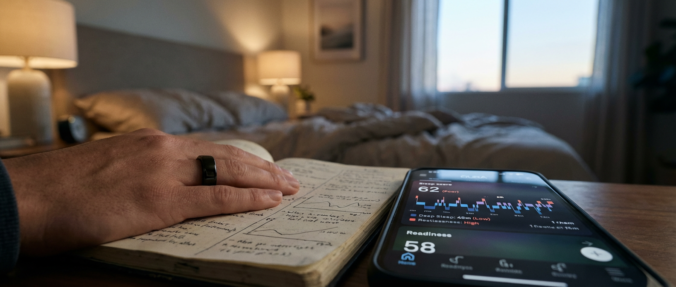
The Thing About Having Numbers You Can’t Unsee
I bought the Oura Ring 4 back in November, right when everyone was posting their holiday shopping hauls and pretending they were finally going to get serious about their health. You know the energy. I told myself it was just curiosity. I had a friend who wouldn’t shut up about their ring, and I figured it was worth the $349 to satisfy my mild obsession with data and mild obsession with pretending I’m doing something productive about my sleep. What I didn’t anticipate was how aggressively a small piece of titanium on my finger would become a mirror I couldn’t avoid looking into every morning.
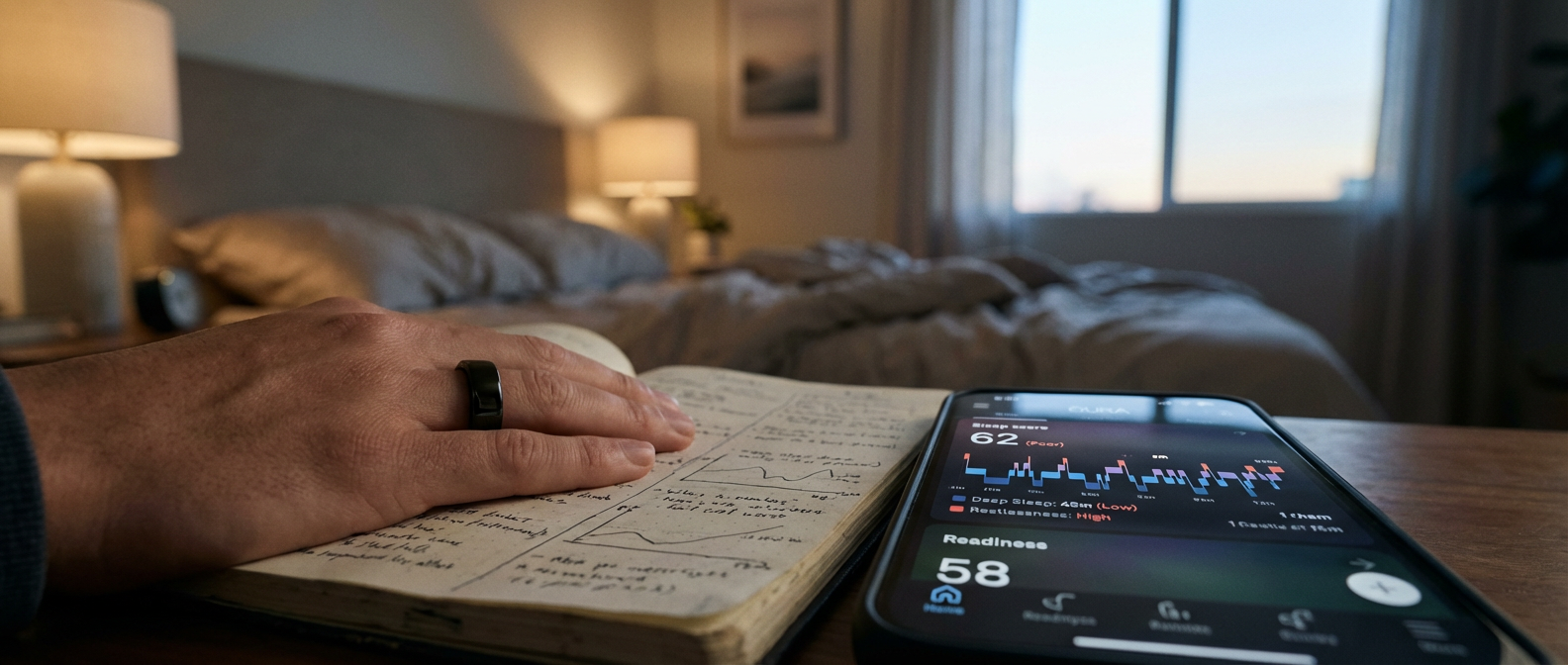
The Oura Ring 4 arrived with all the minimalist packaging that makes expensive things feel both thoughtful and slightly ridiculous. I charged it, downloaded the app, and started collecting data. The ring tracks heart rate variability, sleep stages, body temperature, respiratory rate, and movement. The newer model added cardiovascular age estimation and a resilience score that supposedly measures how well your body recovers from stress, both the physical kind and the invisible emotional kind that we all pretend isn’t destroying us. Within two weeks, I had enough data to make myself deeply uncomfortable.
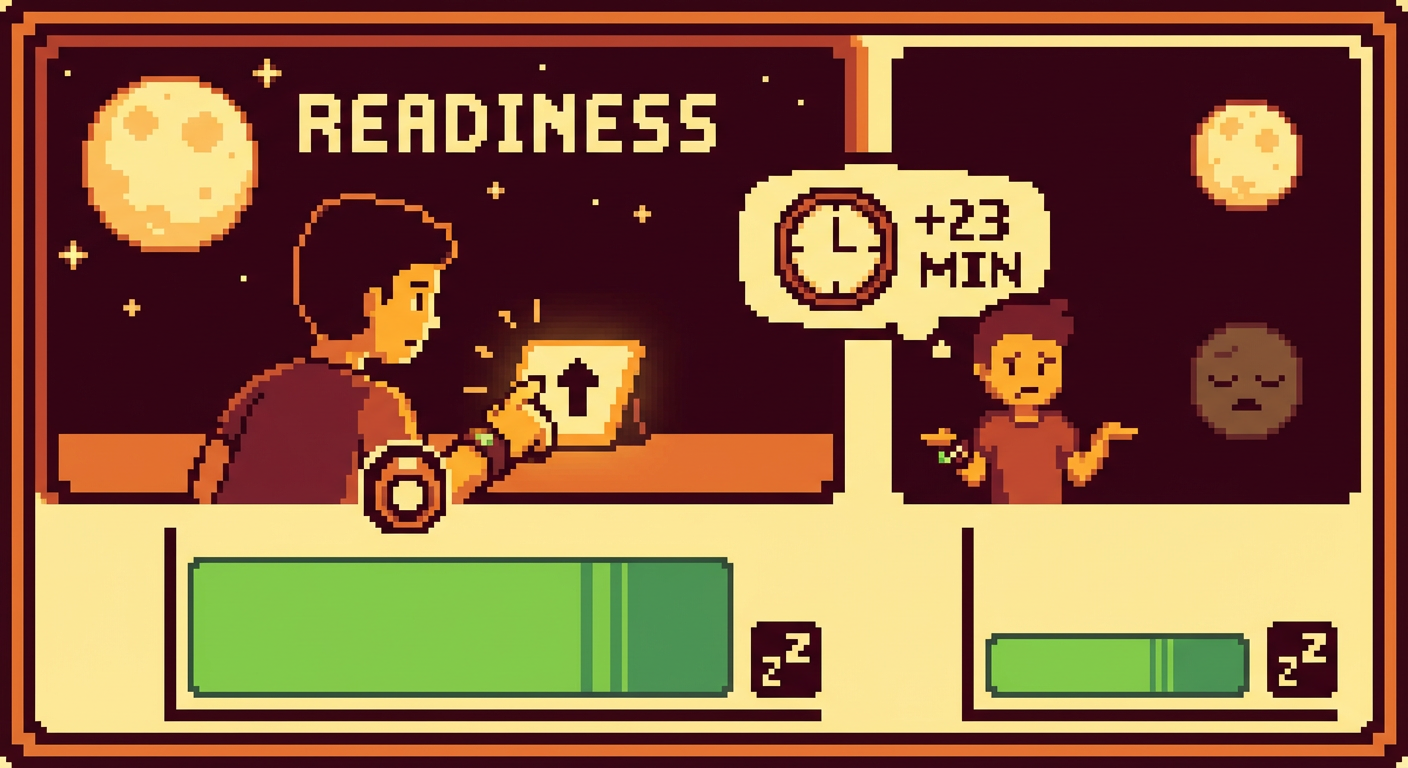
The Readiness Score Became My Daily Accountability Partner
Here’s where it gets honest: I didn’t want a daily accountability partner. I wanted a ring that would tell me I was fine. Instead, I got a Readiness Score that appeared every morning and quietly suggested otherwise. According to Oura’s research, users who actually paid attention to this score and engaged with it daily averaged 23 more minutes of sleep per night after 90 days compared to people like my former self, who glanced at the data once and then scrolled through Instagram instead.
The first month, I watched my Readiness Score hover between 65 and 75. Not terrible. Not great. The kind of score that made me feel vaguely guilty without being catastrophic enough to actually change anything. I’d see it on my wrist while making coffee and think, “Yeah, I’m pretty tired, that checks out.” And then I’d do nothing about it. The ring was just confirming what I already knew, which felt pointless until I realized the real problem: I’d known for years that I wasn’t sleeping well, and I’d done nothing about that either. The ring didn’t create the problem. It just made ignoring it harder.
Then I started actually looking at the data. The ring showed me that my sleep stage distribution was completely off. Too little time in deep sleep and REM. My body wasn’t recovering properly. My heart rate variability suggested I was chronically stressed. The resilience score tracked my emotional recovery on the mornings after difficult days, and the picture wasn’t pretty. I couldn’t explain it away anymore. I couldn’t blame it on one bad night or seasonal variation. This was a pattern.
The Hard Truth About Sleep Data in America
I looked up some statistics because I do that when I’m feeling bad about myself. According to the CDC, one in three American adults regularly gets less than the recommended seven hours of sleep. The number hasn’t budged since 2016. Not one inch. Meanwhile, the wellness industry has exploded. We’ve got meditation apps, sleep supplements, blackout curtains, smart mattresses, white noise machines, and now rings that monitor everything. And yet. We’re still not sleeping.
I sat with this fact for a while. Here I was, spending money on a high-tech ring to measure a problem that everyone knows exists and nobody’s solving. CDC Sleep and Sleep Disorders Data shows the problem is staying the same despite a decade of wellness obsession. That’s not a problem with monitoring. That’s a problem with the way we live.
But here’s where I’m probably wrong about all of this. Or at least, not entirely right. The ring did something unexpected. It validated what I was experiencing. When Oura tested the Ring 4 against polysomnography, a legitimate medical sleep study, it achieved 79% accuracy in identifying sleep stages. That’s the highest accuracy of any consumer device tested. So when my ring told me I was getting fragmented sleep and insufficient deep sleep, it wasn’t guessing. It was probably right. That accuracy changed how seriously I took the data.
When Expensive Technology Meets Ordinary Human Resistance
Let me be clear about something: dropping $349 on a ring plus $5.99 a month for full data access because I needed motivation to sleep better is objectively ridiculous. I could have solved this with a calendar and some self-discipline. There’s been significant debate in online communities about whether the subscription paywall is worth it, and honestly, those people have a point. I paid for convenience and validation when what I actually needed was to stop staying up until 1 AM on my phone.
But the ring did something counterintuitive. Instead of letting me optimize my way out of the problem, it forced me to confront the real variables. The data showed me that my sleep improved most dramatically when I did three boring things: went to bed at the same time every night, stopped working two hours before bed, and put my phone in another room after dinner. None of this was new information. Health experts have been saying these things forever. What was new was having my own data show me that these boring habits worked better than any supplement or technology hack. The ring wasn’t solving the problem. I was solving the problem. The ring was just showing me the proof.
So What Changed, Actually
Six months in, my sleep looks different. My Readiness Score averages 78 now. My deep sleep is up. My REM sleep is more consistent. My heart rate variability has improved enough that the resilience score stays higher even on stressful days. I’m getting roughly 25 minutes more sleep per night than I was before, which lines up exactly with Oura’s research about what happens when you actually engage with the data.
But here’s the thing I’ve been turning over in my head: I don’t know if this improvement is because of the ring, or because I finally got tired enough of seeing the data to do something about it. Probably both. The ring was the permission structure. Sometimes we don’t change because we don’t have a good enough reason. Sometimes we need the data to make it real. Sometimes we need a expensive piece of technology on our finger to force us to admit that we’ve been choosing poorly every single night for years.
The uncomfortable truth the ring made me confront wasn’t that I was sleeping badly. It was that I knew how to sleep better and I just wasn’t doing it. That’s the harder conversation. Not with the device. With myself. If you’re thinking about getting one, that’s the real question to ask: are you ready to actually listen to what it tells you, or do you just want permission to keep doing what you’re already doing? Oura Ring 4 Official Features Overview has all the specs. But the specs aren’t the interesting part. You’re the interesting part. What would actually have to change?


Recent Comments