The TikTok Trend That Made Me Feel Seen (And Guilty)
Around the time everyone was telling me I needed to buy less, I was buying more. Not dramatically more. Just the normal more. A sweater that felt different from the three sweaters I already owned. A water bottle with a handle because the last one was “inconvenient.” Things that seemed reasonable at checkout felt absurd by the time they arrived on my doorstep. So when I started seeing #underconsumptioncore all over my feed, it felt less like a trend and more like an intervention.
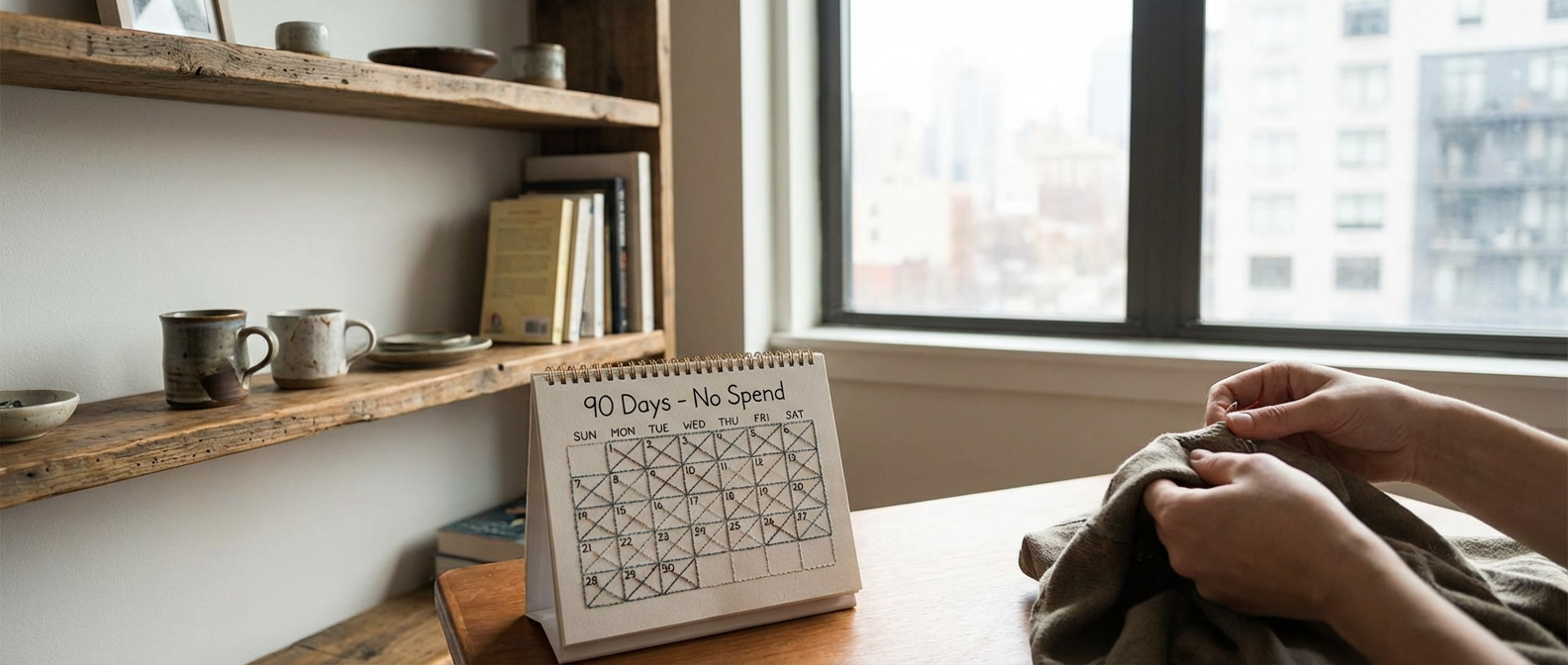
What started as a quiet countermovement to haul culture has gotten genuinely massive. We’re talking over 700 million views on TikTok between mid-2024 and early 2025. The basic premise is disarmingly simple: stop buying things you don’t need. Stop treating consumption as entertainment. Question whether you actually want something or just want the feeling of getting something. It sounds obvious until you realize how many purchases you make on autopilot.
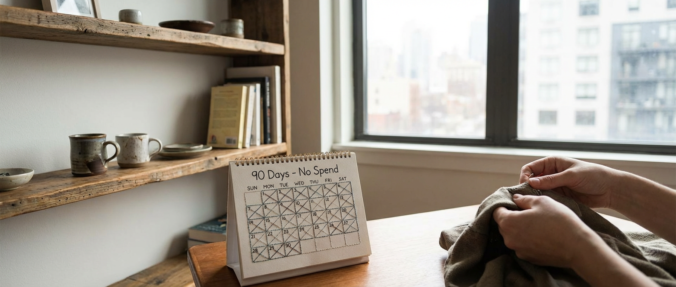
I watched videos of people showing off their tiny wardrobes, their deliberately slow shopping habits, their genuine contentment with owning fewer things. They didn’t look like they were punishing themselves. They looked peaceful. And I thought: I could do that. Ninety days. No new clothes, no new books, no impulse purchases. How hard could it be?
The First Month: When I Realized I Had a Real Problem
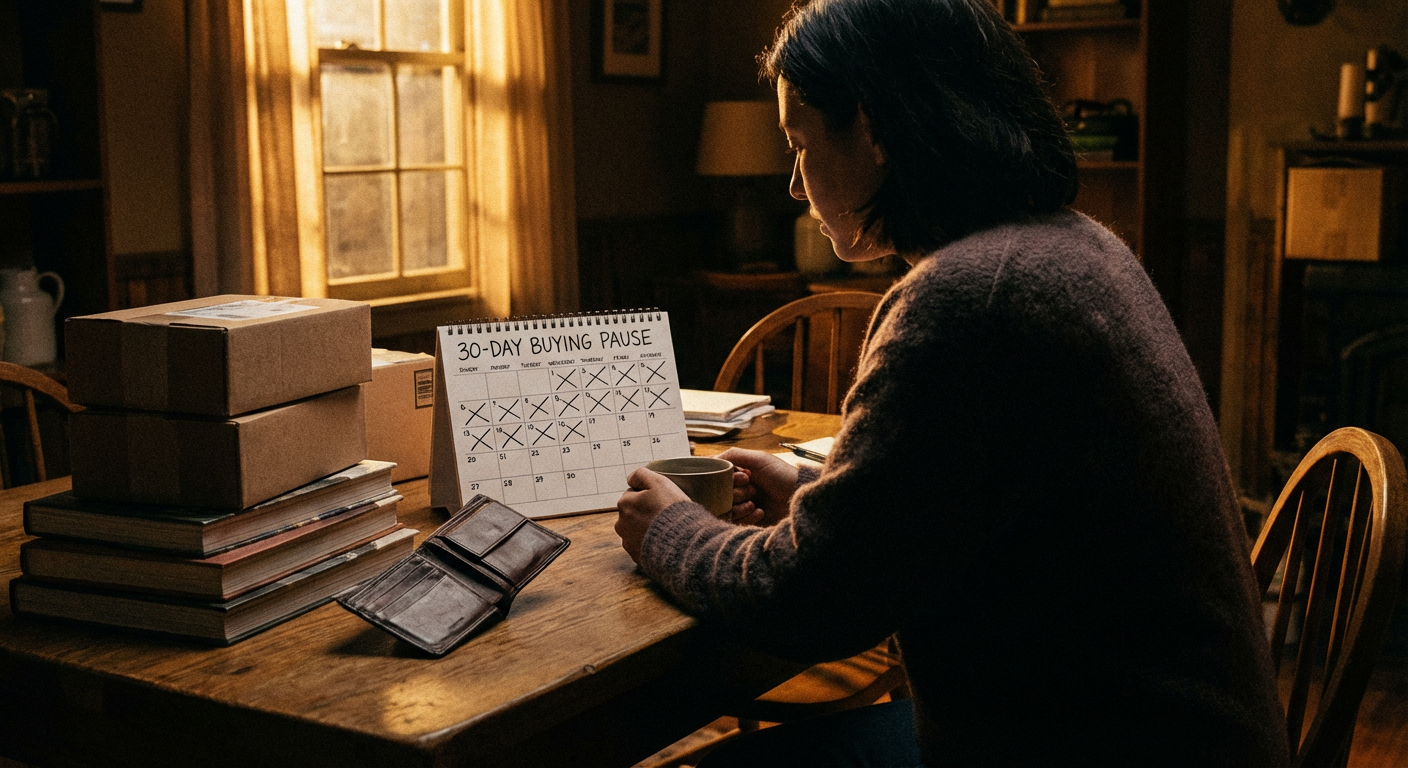
Spoiler alert: harder than I expected. Not in the way I anticipated, though. I thought I’d battle constant cravings. Instead, I discovered that shopping wasn’t really about wanting things. It was about the pause button.
The first week, I had this strange phantom itch. I’d be scrolling through my phone, bored or stressed or just existing between tasks, and my fingers would automatically navigate toward shopping apps. Same muscle memory as checking email or opening social media. The habit ran deeper than I’d admitted. A 2025 NielsenIQ 2025 Consumer Outlook Report found that 52% of Gen Z consumers said they actively tried to reduce discretionary purchases in the past six months, up from 38% in 2023. I suddenly understood why. We’re not just tired of stuff. We’re tired of the decision-making.
By week three, something shifted. I stopped reaching for my phone when I was bored. I started noticing things instead. How many books I actually hadn’t read yet. How many clothes I’d forgotten I owned. How the sweaters I already had were, objectively, fine. More than fine. The default setting of my brain went from “what do I need” to “what do I already have that I’m not using.”
Here’s what nobody tells you about stopping shopping: it makes you confront what you’ve already bought. I found a dress in the back of my closet that still had the tag on. Couldn’t even remember buying it. That single dress became a tiny monument to every purchase I’d made without thinking.
The Middle Part: When I Started Seeing Money As a Concept Again
Around day 45, I did the math. Americans spent an average of $1,497 per household on impulse purchases in 2024 alone. Just impulse. Not planned, considered purchases. Just the small things we grab without thinking. That number made me sit down.
For a decade, I’d been thinking about shopping in this abstract way. You need clothes, you buy clothes. You want something, you get it. The money part felt separate from the wanting part, which I now realize is absolutely bonkers. But that’s how capitalism wants you to think about it. The transaction should feel frictionless and divorced from consequence.
Not buying things forced me to reconnect those dots. Every time I wanted something, I had to sit with the actual cost. Not just the number, but what else that money could do. It sounds like budgeting advice, but it felt more philosophical than that. Like I was remembering how to value things again.
I found myself browsing secondhand sites more than new ones. The ThredUp 2025 Annual Resale Report projects that the secondhand apparel market will reach $350 billion globally by 2028, growing three times faster than the overall retail clothing sector. That statistic started making sense to me in my gut, not just my head. There’s something about buying secondhand that forces you to slow down. You can’t just click and checkout. You have to think.
The Final Month: When My Brain Actually Changed
By day 75, I noticed something weird. Decision fatigue was gone. Not the big decisions. The constant low-level noise of wanting things had quieted. A UCLA psychology study from 2024 found that a 30-day buying pause on non-essentials reduced participants’ reported decision fatigue scores by 19% on average. My experience was less quantifiable but genuinely noticeable. There’s this weight that lifts when you stop constantly evaluating products and making micro-decisions about consumption.
I caught myself actually enjoying having fewer things. My closet was easier to navigate. I got creative with what I owned instead of assuming I needed something new. I borrowed a friend’s jacket instead of buying my own. Learned to thrift with intention instead of impulse. None of this felt like deprivation. It felt like I’d been living in a blurry state and suddenly the resolution came back.
The wildest part? I didn’t want to stop when day 90 came around. I thought I’d feel this explosion of purchasing energy, like I’d been holding my breath and finally get to exhale. Instead, I just kept going. Not as a trend or a challenge, but because something genuinely shifted in how I relate to stuff.
The Part Where I’m Honest About What Actually Changed
I’m not here to tell you that underconsumption core is the answer to everything. It’s not. I still buy things. I’m not wearing a uniform of three identical outfits or getting morally superior about other people’s shopping habits. That was never the point for me.
What changed is my relationship to the act of buying itself. I buy deliberately instead of automatically now. I question whether I’m bored or whether I actually want something. I started seeing shopping as something that required presence instead of something to do while scrolling. Once that clicked, it felt impossible to go back to the before version.
The trend helped because it gave me permission and a structure. But the actual work was just paying attention. If you’re curious about what might shift if you stopped for a while, I’d genuinely recommend trying it. Pick a timeframe that feels doable. Notice what happens. Pay attention to what you reach for when you’re bored or stressed. See if anything rearranges itself in your brain.
I’m genuinely curious whether this stuck with you if you’ve tried something similar, or whether there’s something you’ve been meaning to question about your own habits. Feel free to share in the comments.
Recent Comments