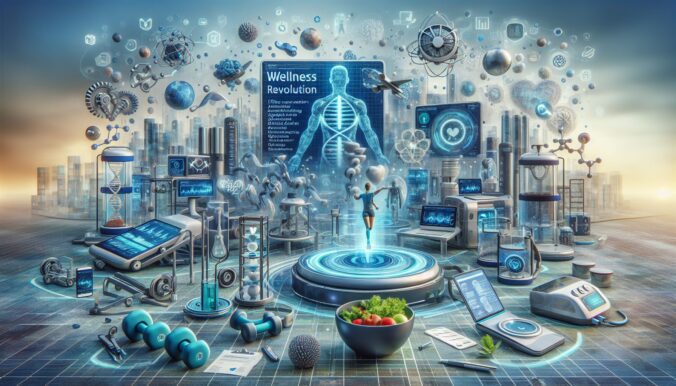
Hey tech enthusiasts! I hope you’re settled in with your favorite ultra-gourmet coffee blend because today we’re diving into an area that’s been getting quite the buzz—longevity. If someone had told me a decade ago that tech would be the Robin Hood of extra life years, I’d probably have given them a skeptical side-eye while sipping on an overpriced latte. Yet here we are, potentially on the brink of a health revolution thanks to some pretty wild new technology.
The Boring-Sounding, Exciting Field of Geroscience
First things first, let’s talk about the foundation of longevity tech—geroscience. Yeah, I know the name sounds like something straight out of a biology textbook that you probably used to nap on, but hear me out. Geroscience completely reimagines how we approach aging. Instead of just trying to delay it, scientists are treating aging like a condition we can actually fix. The philosophy is simple: understand how aging works so we can prolong the time you’re not just alive, but actually thriving.
Researchers are focused on this approach like never before. From cellular senescence to telomere extension, there are several paths being explored. Now, here’s where it gets mind-blowingly cool: much of this happens at the intersection of tech and medicine. You have your CRISPR crowd, with biochemists using it like a magic wand, editing genes to potentially slow down aging. Then there are AI-powered tools crunching massive amounts of data and revealing pathways we never even knew existed.
The Labs of the Future: Silicon Valley’s Latest Obsession
Alright, so maybe you’re wondering where all this magic happens. If I had to paint a picture, I’d say it’s like a hybrid of a classic mad scientist lab and a startup co-working space, packed with test tubes and perpetually restocked La Croix on tap. The tech overlords from Silicon Valley have definitely sunk their teeth into the longevity pie. Big companies like Calico and Unity Biotechnology are betting not just on extending human lifespan but also enhancing our healthspan—the period of life spent free from serious disease.
Imagine stepping into one of these labs and watching them tinker with proteins and pathways like they’re pieces in a high-stakes Jenga game. And with backing from some of the sharpest minds and deepest pockets, the prospects look pretty exhilarating.
Personalized Medicine: The Future is Here, and It’s Personal
Remember those futuristic sci-fi movies where characters would simply wave their hands in front of some flashy, beeping machine and get instant medical diagnoses? Well, folks, we’re inching closer to that reality, thanks to personalized medicine. This isn’t just about making healthcare cooler or better tailored—it’s about completely changing how we extend our lives.
Using data sets larger than your wildest Excel dreams, AI algorithms analyze everything from your genomic data to lifestyle habits, creating custom treatment plans. Suddenly, regular doctor visits feel as ancient as dial-up internet. With personalized medicine, longevity isn’t just some abstract target. It’s a real, achievable goal that these technologies are zeroing in on, one patient-specific calculation at a time.
The Big Ifs: Challenges and Ethical Tightropes
But let’s not get too ahead of ourselves. Every rose has its thorn, and longevity tech is no exception. For one, there’s the huge challenge of accessibility. Will this become a resource for the elite—a sort of techno-royalty—leaving the rest of us scrambling for crumbs like it’s Black Friday at a gadget sale? Groups advocating for wide accessibility are trying to ensure tech benefits everyone, not just those flaunting Rolexes.
Then there are ethical dilemmas popping up faster than you can say “synthetic biology.” If we could add extra decades to our lives, how would that change our societal structures, which are already stretched thinner than the latest iPhone? And dare we ask, what if AI messes with data enough to prioritize longevity over wisdom, creating centenarians who lack real life experience?
The Final Stretch: A Balanced Optimism
Even with all the hurdles, I’m genuinely excited about how these technologies could give us more meaningful years. It’s a complex, high-stakes puzzle we’re putting together, but if tech has taught us anything, it’s that where there’s innovation, there’s huge potential.
So there you have it, my fellow digital dreamers. Whether you’re a cynic worried about future dystopias or more of a ‘glass-half-full’ kind of person ready to sign up for a popsicle subscription in 2100, the longevity revolution is a wild mix of exciting possibilities and necessary caution.
Let’s keep questioning, dreaming, and tinkering, shall we? After all, our tomorrow might last longer than we ever thought possible. Cheers to that! 🌱
Recent Comments