
The Conversation I Wasn’t Expecting
So there I was, sitting on that crinkly paper in the exam room, getting the usual “your blood pressure looks good” speech, when my doctor casually asked if I’d been thinking about trying a GLP-1 medication. Not in a judgmental way. Just like she was asking if I’d tried the new coffee place downtown. I laughed a little because honestly, I wasn’t sure if she was serious. But she was.

This wasn’t some random suggestion. She’d been my doctor for six years and knew my history, my actual lifestyle habits, and what I’d already tried. She explained that the medical thinking around weight loss has shifted pretty dramatically, and she thought it might be worth a real conversation. The thing is, she was right. The approach to obesity treatment has fundamentally changed in ways I didn’t fully grasp until she walked me through the specifics.
Why Everyone’s Suddenly Talking About This
You notice it everywhere now. Your coworker mentions Ozempic at lunch. A celebrity does an interview about it. Someone’s TikTok is about their Zepbound experience. It’s not just casual chatter—this reflects a massive shift in how these drugs are being prescribed. According to recent health data, prescriptions for GLP-1 receptor agonists increased by more than 400% between 2022 and 2025. That’s not a small uptick. That’s a complete recalibration of the market.
The American Medical Association updated its official obesity treatment guidelines in 2025 to list GLP-1 medications as a first-line option, which matters. These drugs aren’t being tucked into the “last resort” category anymore. They’re up there with lifestyle modifications as legitimate, evidence-based treatment. When major medical organizations make that kind of pivot, it usually means something real has shifted in the research.
The sales numbers tell their own story too. Novo Nordisk reported that global Ozempic and Wegovy sales exceeded $25 billion combined in 2025. You don’t get those kinds of numbers from a niche product. You get them from something that’s genuinely changing how people approach their health, for better or worse, depending on how you look at it.
What The Research Actually Shows
My doctor pulled up some recent data, and this is where things got interesting. A major trial published in the New England Journal of Medicine obesity research showed that tirzepatide, which goes by the brand name Zepbound, produced an average weight loss of 22.5% of body weight over 72 weeks in adults with obesity. That’s not trivial. That’s meaningful, measurable results over a sustained period. I asked her what that translates to in real terms, and she said for someone at, say, 250 pounds, that would be around 56 pounds. We’re not talking about incremental change here.
But here’s what my doctor emphasized: these drugs work because of how they interact with your hunger signals and your blood sugar regulation. They’re not stimulants that trick your body into burning more calories. They actually change how your brain perceives hunger and fullness. That’s why the weight loss is so consistent in the trials, she explained. You’re not white-knuckling your way through a diet. You’re actually eating less because your body is sending different signals.
The Part Nobody’s Really Talking About: Who It’s Actually For
This is where my doctor’s recommendation started to feel personalized instead of generic. She wasn’t suggesting I take this because I’m overweight and should be thinner. She was suggesting it because I have specific health markers—slightly elevated triglycerides, prediabetic glucose levels, a family history of type 2 diabetes—that would benefit from the metabolic effects of these medications. The weight loss is almost secondary to managing these underlying risks.
She also pointed out something I hadn’t considered: I’ve been trying to lose weight through diet and exercise modifications for years with limited success. That’s not a character flaw. That’s potentially a metabolic reality that these drugs actually address. Some people have a harder time with weight management not because they’re lazy or undisciplined, but because their body chemistry makes it structurally more difficult. These medications can help rebalance that.
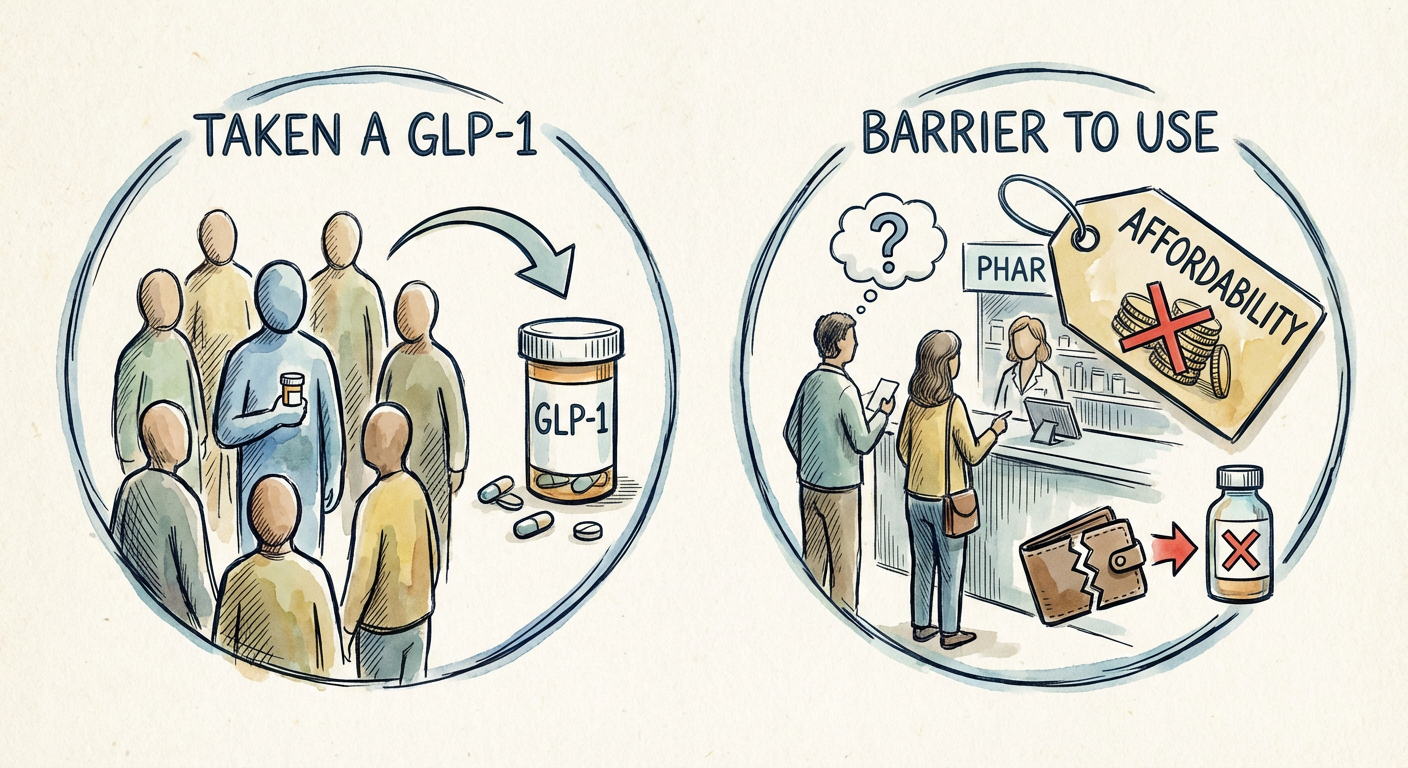
Affordability came up too, and it’s worth being honest about because it’s a real barrier for a lot of people. According to the KFF GLP-1 medication tracking poll, about 1 in 8 American adults has taken a GLP-1 medication at some point, but 43% cited cost as the primary reason they stopped. My doctor was upfront that insurance coverage varies wildly depending on your plan, and we’d need to check my specific coverage before making any decisions.
Where I’m Landing on This
I’m not jumping into this immediately, but I’m also not dismissing it anymore. What shifted for me was understanding that this isn’t about vanity or taking a shortcut. It’s about using a medical tool that’s been thoroughly researched and officially integrated into obesity treatment guidelines because it actually works for certain people in certain situations. That’s the friend-over-coffee version of what my doctor explained: if you have metabolic markers that would benefit from it, and you’ve struggled with traditional approaches, this might be worth exploring with your doctor.
The key word there is “your doctor.” This isn’t a thing to decide based on someone’s Instagram post or what you overheard at the gym. It requires an actual conversation about your specific health history, your goals, what you’ve already tried, and what your insurance situation looks like. My doctor made that clear, and I appreciated it because it cut through all the noise.
If you’ve been wondering about this like I was, the real move is scheduling that conversation. Not because you should definitely take these drugs, but because the evidence has changed enough that it’s worth understanding what it actually says and what it might mean for you specifically.
Recent Comments