
The Day I Broke the Rules Without Realizing It
Last month, I woke up on a Tuesday and decided I wasn’t going in. Not because I was sick. Not because I’d planned it. I just looked at my calendar, saw it was full of the kind of meetings that could have been emails, and thought: no. I took the day off on impulse. I didn’t email my boss some elaborate justification. I just marked myself out of office and went back to bed for another hour.

By lunchtime, I’d been on a walk, read an entire book chapter without refreshing Slack, and made something that wasn’t toast for breakfast. By evening, I realized I’d accidentally done something that apparently has a name now and also a study backing it up. I’d taken what’s being called a “micro-sabbatical,” and I wasn’t alone in doing it without meaning to.
Here’s where it gets interesting: Gallup’s State of the Global Workplace report for 2025 actually ranked this as one of the top five workplace behavior shifts happening right now. Not someday. Right now. We’re not talking about fantasy four-day workweeks or European summers off. We’re talking about Tuesday.
What Quiet Vacationing Accidentally Became
Before “micro-sabbatical” was a term anyone used outside of HR departments, there was “quiet vacationing.” The name was kind of a catchall phrase that started circulating in 2024 for people taking personal time during work hours without formally logging it. Not exactly noble stuff on paper. A Harris Poll survey from Q2 2025 found that 37 percent of remote and hybrid workers admitted to doing this regularly enough that researchers decided to track it.
What surprised me is that nobody seemed particularly ashamed about it. The data existed. The behavior was widespread. And instead of cracking down, the conversation shifted to something quieter but also more honest: maybe the problem wasn’t that people were stealing time. Maybe the problem was that people had nowhere legitimate to take it.
Micro-sabbaticals feel like where that guilt went. They’re intentional. They’re usually disclosed. They’re typically just one to three unstructured weekdays taken during the middle of a quarter, outside of formal vacation time. The difference is that people are doing them on purpose now and kind of owning it. When a trend gets a Gallup citation, it stops being something you do quietly and starts being something you do openly.
The Data Says Something Weird About How We Actually Work
Here’s the part that made me stop and re-examine my Tuesday: a Korn Ferry study from 2025 found that employees who took at least two fully disconnected mid-week days per quarter reported 31 percent higher creative output scores on subsequent project evaluations. Not a little higher. Not marginally. Thirty-one percent.
That’s the kind of number that makes you wonder why we’re still having the conversation about whether people should be working five days a week. If you take two Tuesdays off and your creative work gets measurably better, why is that somehow radical? Why does that need research to justify it?
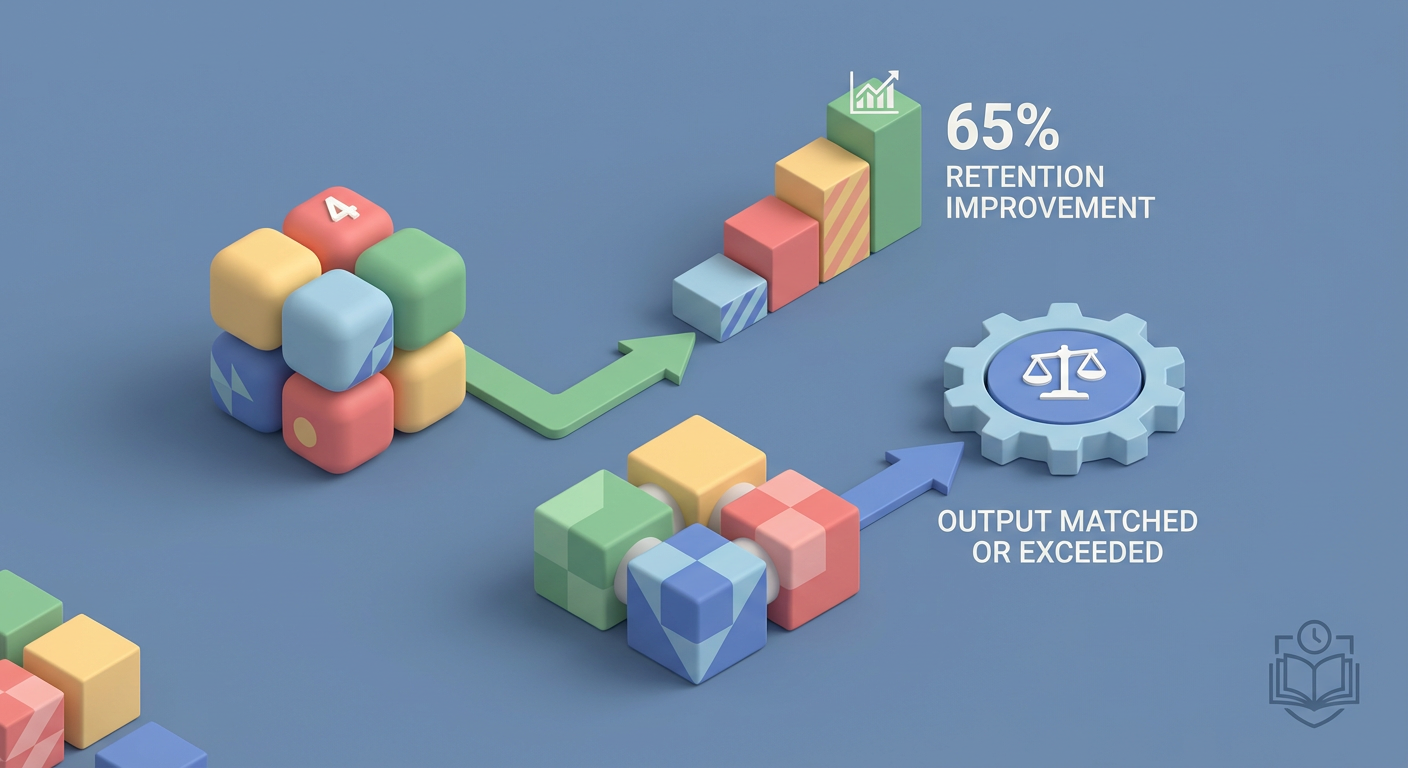
The four-day workweek trials that Cambridge University tracked across 60 UK companies through 2024 and 2025 showed retention improved by 65 percent and productivity matched or exceeded five-day baselines in 82 percent of the participating firms. I know those are UK numbers, not US numbers, but they’re also not dramatically different from how Americans work. We sit at desks. We write emails. We attend meetings that could have been emails. The geography doesn’t change the fundamental math.
And yet, according to US Travel Association vacation data, the average American worker left 9.5 vacation days unused in 2025. That’s almost two full weeks sitting on the table. We have the PTO. We’re not using it. We’re barely even taking Tuesday.
Why We’re All Pretending This Isn’t the Solution
I think micro-sabbaticals are becoming a thing because they’re small enough to feel achievable. Nobody’s waiting for their company to suddenly announce a four-day workweek. Those conversations are still theoretical, still happening in boardrooms with consultants. But a Tuesday? A Tuesday feels like something you can actually do.
The Cambridge four-day week trial results proved that structural change works when you have the buy-in and the planning. But most of us don’t have that. Most of us are working at companies where this conversation hasn’t even started. So we take a Tuesday instead.
And here’s the unpopular opinion: I think that’s fine. I think that’s actually honest. I don’t think we need to wait for the perfect policy before we admit that the five-day structure isn’t serving most of us anymore. A micro-sabbatical isn’t perfect. It’s not equitable across all industries. It definitely doesn’t work if you’re in customer service or hospitality or any field where you can’t just log off. But for the people who can do it, it seems to be working quietly.
My Tuesday off wasn’t revolutionary. I didn’t change the workplace. I didn’t fix capitalism. I just read a book and took a walk and made actual breakfast. My creative output will probably go up by 31 percent next month when I submit my next project. Or it won’t. But I’ll know the difference. I’ll have felt the difference.
The Inconvenient Truth About How We’re Actually Living Now
The thing about micro-sabbaticals that nobody wants to admit is that they’re an admission of defeat and a form of resistance at the same time. They’re people saying: the system isn’t working. And then: I’m going to fix it myself, even if it’s just for Tuesday.
This isn’t sustainable long-term. It’s not equitable. It’s not a policy. But it’s also not nothing. It’s a pattern. It’s 37 percent of remote workers doing it. It’s Gallup tracking it. It’s research showing it works. It’s that Cambridge study proving that people are more productive and stay longer at jobs when they don’t work five straight days.
My Tuesday off was an accident that turned into data. Now I’m wondering if there are other accidents happening right now that are actually the future trying to show up early. If you’ve taken an unexpected day mid-week and felt that shift happen, I’d like to hear about it. Not because I’m running a survey. Just because I’m curious whether what happened to me on a Tuesday is something that’s happening to other people too. Because if it is, then maybe this isn’t an accident at all.
Recent Comments