The Great Unraveling of Always-On Culture
Something shifted in 2022 when “quiet quitting” entered our vocabulary. What started as a TikTok trend became a mirror reflecting our collective exhaustion with performative overwork. Four years later, the phrase still surfaces in workplace conversations, not as a fad but as shorthand for a fundamental questioning of work’s role in our lives.
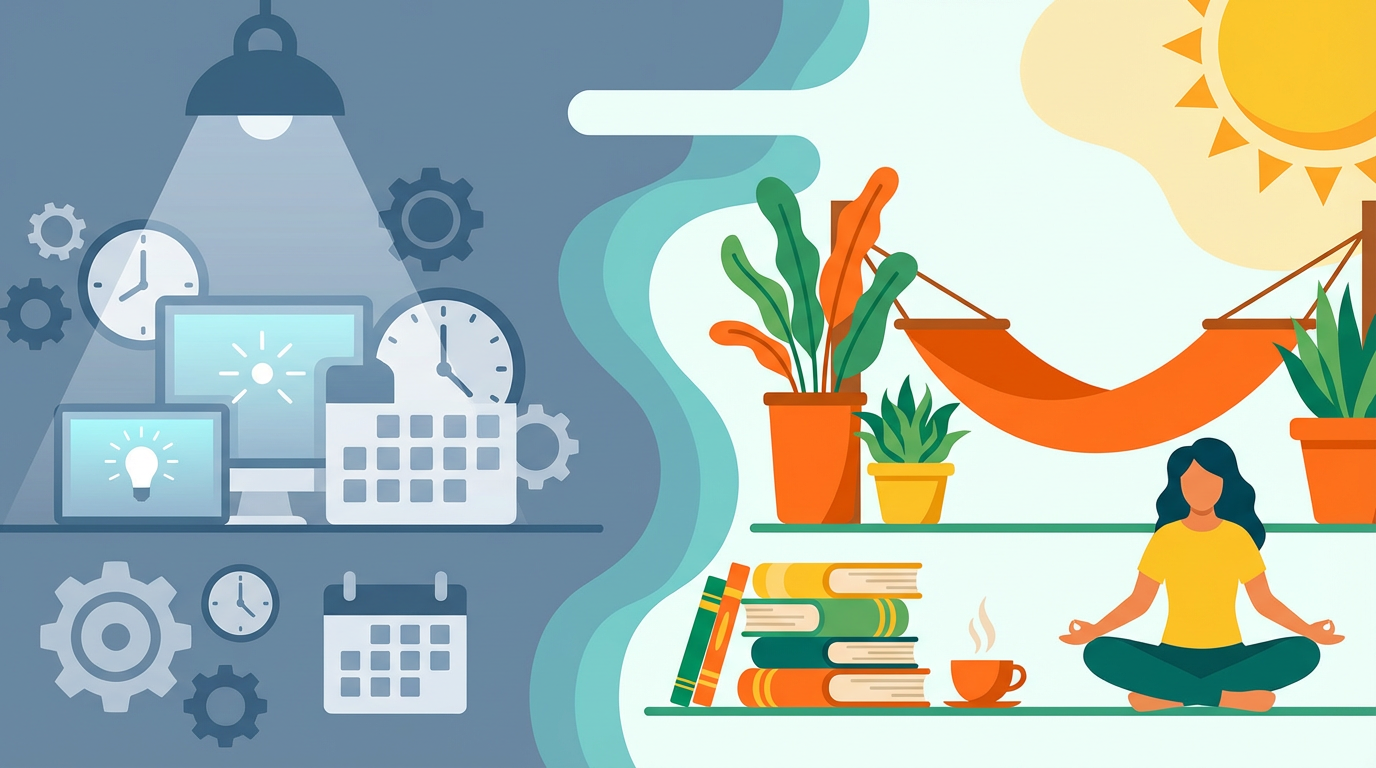
The backlash wasn’t sudden. It was a slow-burn rebellion against a decade of worshiping hustle culture. We’d been told that 5 AM wake-ups and side hustles were the path to fulfillment. Instead, we found ourselves burned out, scattered, and somehow less productive than before. When the World Health Organization recognized burnout as an occupational phenomenon in 2019, it wasn’t just medical validation. It was permission to admit the system wasn’t working.
What came next wasn’t laziness or lack of ambition. It was a realization that productivity and well-being don’t have to be enemies. Here’s the weird part: many of us got better at our jobs when we stopped trying so hard to optimize everything. I’ve watched friends become more creative and focused once they stopped tracking every minute of their day.
The Quiet Revolution in How We Work
While we were having heated debates about remote work, something more subtle was happening. Companies started experimenting with radical changes to how work gets done. The four-day work week went from utopian thinking to reality for over sixty organizations. The results challenge everything we thought we knew about time and output.
The data tells a story that defies conventional wisdom. Productivity stayed the same or actually improved when people worked fewer hours. Not because they crammed more into less time, but because they approached work differently. With constraints came clarity. With limits came focus.
Remember when Basecamp and Signal took their anti-meeting stance? It looked like contrarian posturing at the time. Now it seems prophetic. Teams discovered that defaulting to async communication and protecting uninterrupted work time produced better outcomes than the endless parade of “quick syncs” that had taken over our calendars. The rebellion against meeting culture wasn’t about being antisocial. It was about recognizing that collaboration and constant communication are two different things.
The Rise of Intentional Knowledge Work
As workplace culture shifted, so did our relationship with information and learning. Personal knowledge management tools like Obsidian and Notion exploded from niche productivity apps to platforms with millions of users. But this wasn’t just about better note-taking. It represented a fundamental change in how we process and retain knowledge when we’re drowning in information.
These tools appealed to people because they promised connection and synthesis rather than just storage. People weren’t collecting information anymore. They were building personal knowledge networks that matched how their minds actually work. The popularity of concepts like “building a second brain” showed a growing awareness that our relationship with information needed to be intentional, not reactive.
This shift happened alongside the growing influence of thinkers like those featured in Paul Graham essays and Cal Newport productivity writing, who argued for deep work and focused attention as competitive advantages. The message hit home because it offered an alternative to the fractured, notification-driven way most of us had been working.
Digital Minimalism as Counter-Culture
Something else was brewing in our personal lives. Dopamine detoxes and digital minimalism practices moved from fringe experiments to mainstream consciousness. What started as extreme attempts to avoid screens for days turned into more sustainable approaches to technology use.
The appeal wasn’t about rejecting technology entirely. It was about reclaiming control over our attention. People began treating their smartphones like power tools: useful for specific tasks but not something to keep running all the time. The rise of “dumb” phones as backup devices, reading apps that strip away social features, and the growing popularity of analog tools for thinking all pointed to a hunger for more intentional engagement with our digital tools.
This wasn’t nostalgic romanticism about the pre-digital era. It was a smart response to realizing that the default settings of modern technology aren’t designed for human happiness. The counter-culture wasn’t anti-technology. It was pro-human.
What We Actually Learned About Productivity
Looking back, the biggest insight wasn’t about any specific productivity technique or tool. It was recognizing that productivity is deeply personal and depends on context. The systems that work for a venture capitalist might be completely wrong for a teacher or a parent juggling multiple responsibilities.
The real breakthrough was moving away from one-size-fits-all solutions toward a more experimental, adaptive approach. People started treating productivity advice like recipes: useful starting points that need adjusting based on your ingredients, preferences, and circumstances. This led to more sustainable practices because they were built on self-knowledge rather than someone else’s rules.
Maybe most importantly, we began questioning whether optimization should even be the goal. Sometimes the most productive thing you can do is accept inefficiency for other values: creativity, relationships, rest, or simply the pleasure of doing something slowly and well.
The anti-hustle backlash didn’t make us less ambitious or less productive. It made us pickier about what deserved our energy and more thoughtful about how we spent our most valuable resource: attention. That might be the most important productivity insight of all.
What’s your experience been with finding balance between productivity and well-being? Have you noticed changes in how you think about work and efficiency over the past few years? The conversation continues as we each figure out these tensions in our daily lives.
Recent Comments